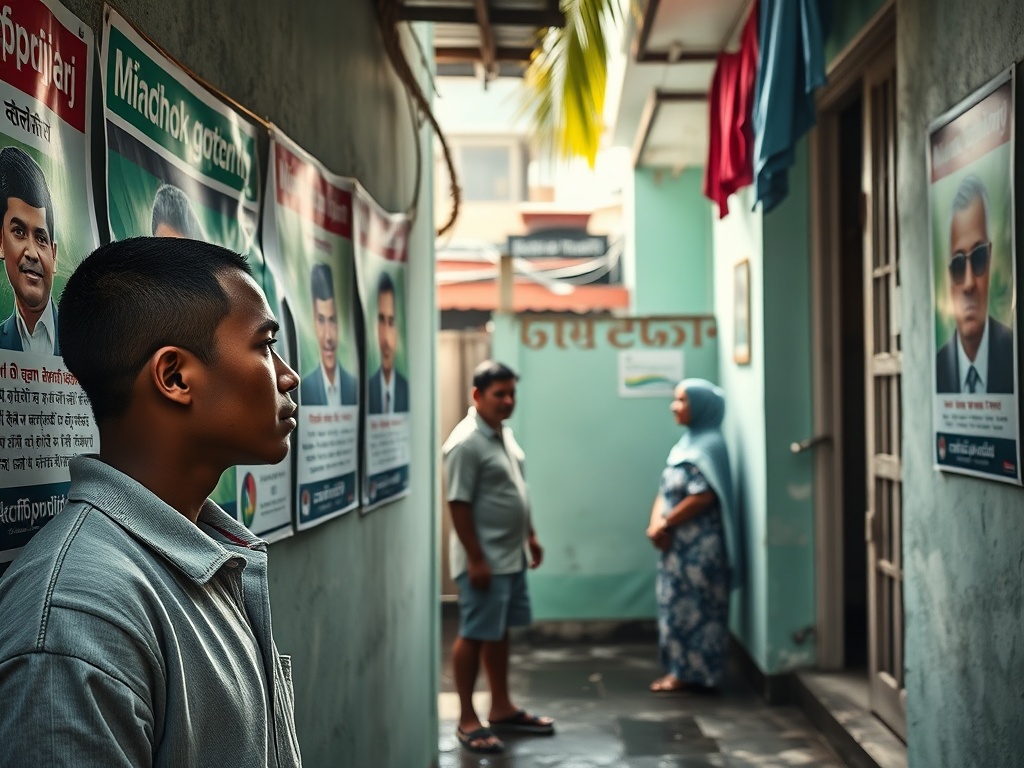
When Your Father's Politics Become Your Own
In the intimate island communities of the Maldives, political identity often feels less like a choice and more like an inheritance. The observation that Rashwan 'just says whatever his dad tells him to say' reflects a broader pattern where political alignment becomes family tradition rather than individual conviction. This phenomenon creates a landscape where genuine debate gives way to rehearsed talking points, and critical thinking becomes secondary to family loyalty.
The practice of receiving political party membership forms as birthday gifts represents more than just family influence—it signals the institutionalization of inherited political identities. When young adults enter the political arena with predetermined affiliations, the space for independent thought and fresh perspectives shrinks dramatically. The result is a political culture where positions are defended not on merit but on familial allegiance, creating echo chambers that resist external voices and alternative viewpoints.
Social media platforms, intended to facilitate open discussion, often reinforce these divisions. The casual mention of being blocked by political figures online illustrates how digital spaces become extensions of the same insular thinking. When political leaders and their followers create information bubbles, they effectively shut down the possibility of meaningful engagement across ideological lines.
This system of inherited politics has tangible consequences for governance. When political positions are treated as family heirlooms rather than platforms for public service, policy decisions can become entangled with personal loyalties. The focus shifts from solving national problems to maintaining family or political dynasty interests, leaving critical issues like economic challenges and social development under-addressed.
Breaking this cycle requires conscious effort from both individuals and institutions. Political education that emphasizes critical thinking over blind allegiance, media that challenges rather than reinforces biases, and leadership that values merit over lineage could help create a more dynamic political landscape. The path forward depends on recognizing that while family influence is inevitable in close-knit communities, it shouldn't dictate the future of an entire nation.
The question remains whether Maldivian society can transition from a politics of inheritance to one of individual conviction—where citizens engage with ideas rather than personalities, and where political identity becomes a matter of thoughtful choice rather than familial default.
— Source fragments: Rashwan can only talk but when it comes to thinking of a solution it is far beyond his capacity. He just says whatever his dad tells him to say; Your opinions were formed and are heavily influenced by your own dad; You're the type of guy who received a form to join a political party for his 18th birthday party; Also, Ibra has me blocked lol; U should get to know ibra first before assuming his intentions