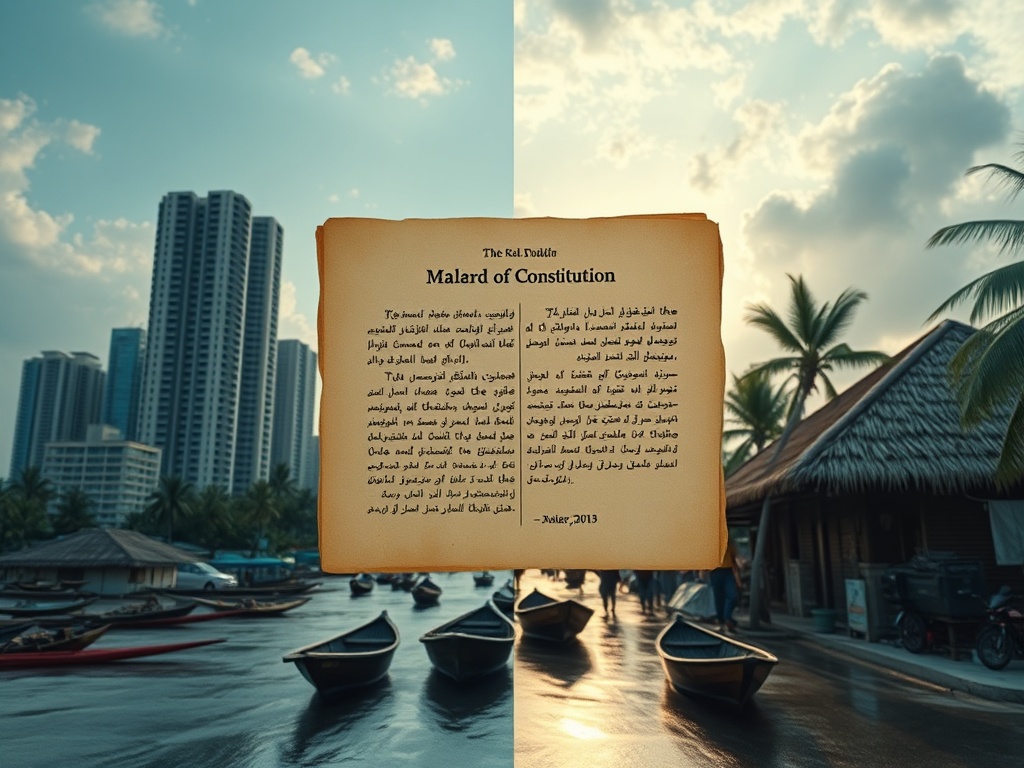
When Your ID Card Isn't Enough to Feel Maldivian in Malé
The constitution is clear: every Maldivian citizen has the right to migrate to any inhabited island without restriction. Yet this fundamental guarantee increasingly feels like an empty promise to many citizens who find themselves treated as second-class in their own capital.
The tension between constitutional ideals and ground realities has sparked intense public debate. Critics argue that while the document guarantees equal rights, implementation creates an unwritten hierarchy favoring those with Male' lineage and financial means. The discussion has shifted from abstract legal principles to tangible barriers—from housing shortages to bureaucratic obstacles that effectively restrict mobility.
At the heart of the matter lies the capital city itself, a reclaimed land that citizens note was "created for birds, corals and fish" before becoming a bustling urban center funded by public money. Many question why they remain excluded from full participation in the city they helped build. The debate touches on deeper questions of belonging and identity in a nation where island origins still carry significant social weight.
The policing and treatment of citizens has also come under scrutiny, with observers noting incidents where authority appears to override compassion. These encounters raise broader concerns about dignity and equal treatment under law, regardless of one's position or background.
Meanwhile, the housing crisis in Malé exacerbates these tensions. Government housing projects, intended to provide relief, often become politicized or exploited, leaving many citizens struggling for basic accommodation in the overcrowded capital. The situation creates a paradox: constitutional rights exist on paper, but practical barriers make them inaccessible to many.
As the conversation evolves, it reveals a society grappling with modernization while confronting inherited social structures. The fundamental question remains how a nation can honor both its constitutional commitments and the complex realities of island life without creating tiers of citizenship. The debate continues, not just in legal chambers but in the daily experiences of citizens navigating the space between rights and realities.
— Source fragments: Constitutional right to migrate, second-class citizens in capital, housing crisis, discrimination based on Male' lineage, policing and human dignity, reclaimed land and public investment contradictions