When Your Inheritance Is Land You Can't Live On
In the scattered atolls of the Maldives, land is more than just property—it represents identity, security, and sometimes, generational burden. The recent Binveriya scheme has ignited fierce public debate, revealing fundamental tensions between tradition and modernity in how Maldivians relate to territory and belonging.
At the heart of the controversy lies a simple question: why should land ownership remain tethered to birthplace in an increasingly mobile society? One observer notes the irony of being "stuck with land we are born in," calling it a "feudal system" that limits opportunity. The vision of a more fluid reality emerges—where a northerner could accept a job in Addu, purchase property, live there for years, then sell and return home when their tenure ends. This mobility remains largely theoretical under current frameworks.
The demographic reality adds complexity. With population growth stagnating or declining in many islands, there should theoretically be enough land for everyone. Yet the distribution remains profoundly unequal. The conversation turns to wealth dynamics: "Land is wealth. No wealthy person talks against wealth. It's us poor people who are talking against our interests."
Policy solutions emerge from the discourse. The core problem isn't scarcity but allocation—what some call "land hogging." When holding land costs nothing, there's little incentive to release unused properties. The example of prominent business figures holding vast tracts illustrates how current systems benefit those already advantaged.
Personal stories highlight the system's contradictions. One voice from Baa Atoll describes inheriting multiple properties while building a guesthouse on council land, yet having lived in Malé for twenty years. Another challenges the fairness: "If you are 18 and you have a Malé address, even if you've never lived in Malé, you got land... simply for your blood."
The inheritance question proves particularly contentious. Many urban residents, especially in Malé, live as tenants despite theoretical land rights elsewhere. "My inherited land? Could you please help me find that land?" one asks pointedly, highlighting the gap between paper ownership and practical reality.
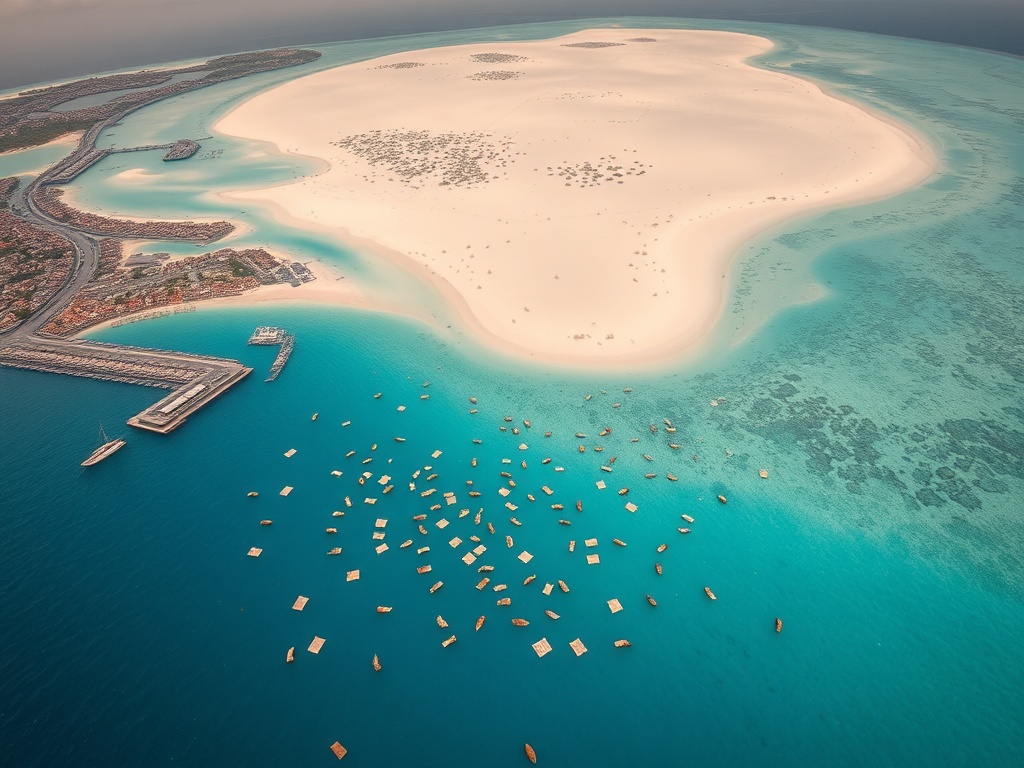
Previous reclamation projects add another layer. Multiple islands have seen land created over the past seventeen years, yet much remains vacant. The question arises: why pursue massive new reclamation when existing reclaimed land sits unused?
The political dimension surfaces cautiously. Some suggest policy failures might be deliberate, designed to maintain certain advantages. The observation that "neither party has any good policies to fix it" reflects widespread disillusionment with political solutions.
What emerges is a landscape of competing truths: the emotional weight of ancestral land versus the practical needs of a modern economy; the promise of mobility versus the security of rootedness; the rhetoric of equity versus the reality of implementation. The conversation continues, not just about who gets what land, but about what kind of society these distribution systems create—and whether they serve the Maldives we're becoming, or simply preserve the Maldives we've been.
— Source fragments: currently we are stuck with land we are born in; population is not growing; land is wealth; policy could fix land hogging; inherited land versus practical reality; Binveriya scheme controversies; previous reclamation projects remain vacant