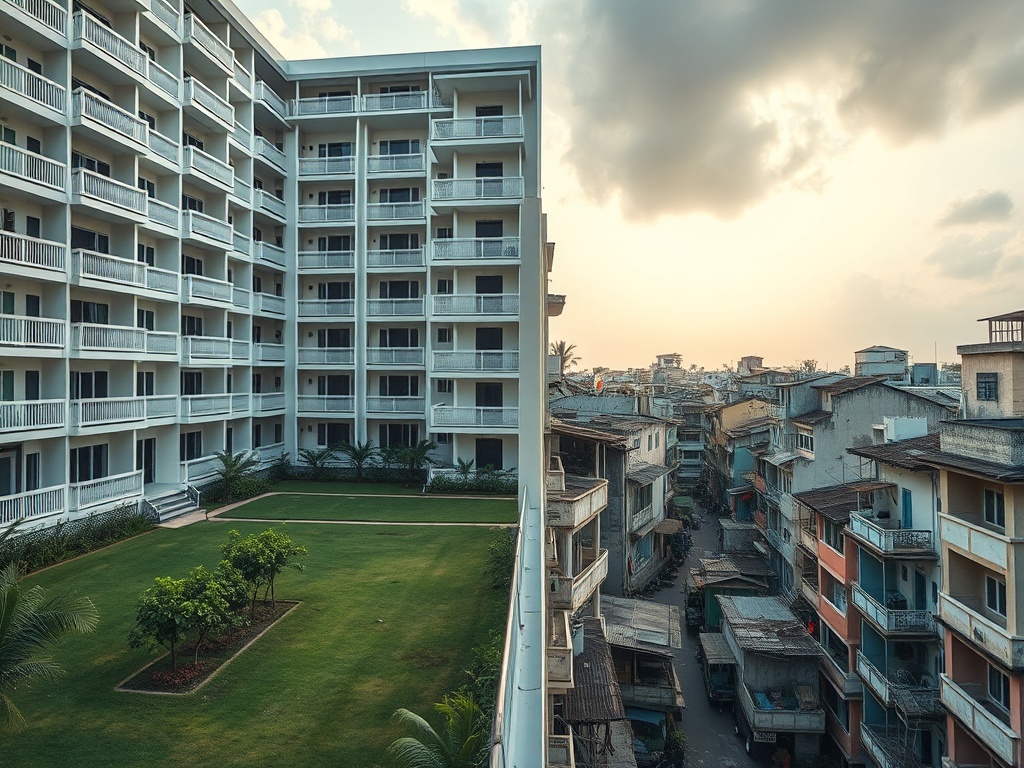
When Your Name on the List Means Someone Else Gets the Key
In the ongoing debate over housing policy in the Maldives, a troubling pattern has emerged—one that threatens to institutionalize inequality rather than alleviate it. The fundamental question of who deserves priority in housing allocation has become a litmus test for social justice in our island nation.
Housing, by any reasonable measure, constitutes a basic human need. Yet current policies appear to prioritize allocation based on professional sectors rather than genuine need. This approach creates a perverse reality where those with the highest salaries often receive additional benefits like private health insurance, while the most vulnerable citizens face indefinite waiting periods for adequate shelter.
The system's flaws extend beyond mere allocation criteria. Even those fortunate enough to receive housing often find themselves with units too small for meaningful family life—the dream of a 'goathi' with garden space remains elusive for most. Meanwhile, practical concerns about land reclamation and construction timelines add another layer of uncertainty to an already strained process.
What makes this situation particularly concerning is how it mirrors historical segregation systems. The comparison to apartheid-era South Africa, while stark, highlights a disturbing parallel: in both cases, geographic registration determines life outcomes. Your registered island can mean the difference between receiving free land, waiting fifteen years or more, having your application accepted at all, or being condemned to a lifetime of rental payments.
This creates two distinct classes of citizens: those who access land through privilege and political connection, and those who face what amounts to permanent rental punishment. The outcome is a society divided not by race, but by bureaucratic designation and political favoritism.
The core principle being challenged is whether housing should function as a political reward or as a fundamental right. Current policies suggest the former, treating adequate shelter as something to be earned through political loyalty rather than guaranteed through citizenship. This approach contradicts the Islamic principles of justice and equality that form the foundation of Maldivian society.
What's needed is a fundamental rethinking of housing as a national priority. Policies should aim to reduce inequality, not deepen existing divides. They must treat every Maldivian with equal dignity, regardless of birthplace or political affiliation. The solution lies not in creating new categories of privilege, but in establishing a fair, transparent system that recognizes housing as a universal right rather than a political favor.
As the housing crisis in Malé and other congested areas continues to worsen, the urgency for reform grows. The current approach—where subsidized flats are often subleased for profit by absentee leaseholders—only compounds the injustice. A truly national housing policy would prioritize need over connections, dignity over discrimination, and unity over division.
— Source fragments: Housing is a basic need; prioritization by industry criticized; comparison to apartheid systems; free land vs rental punishment; housing as right not privilege