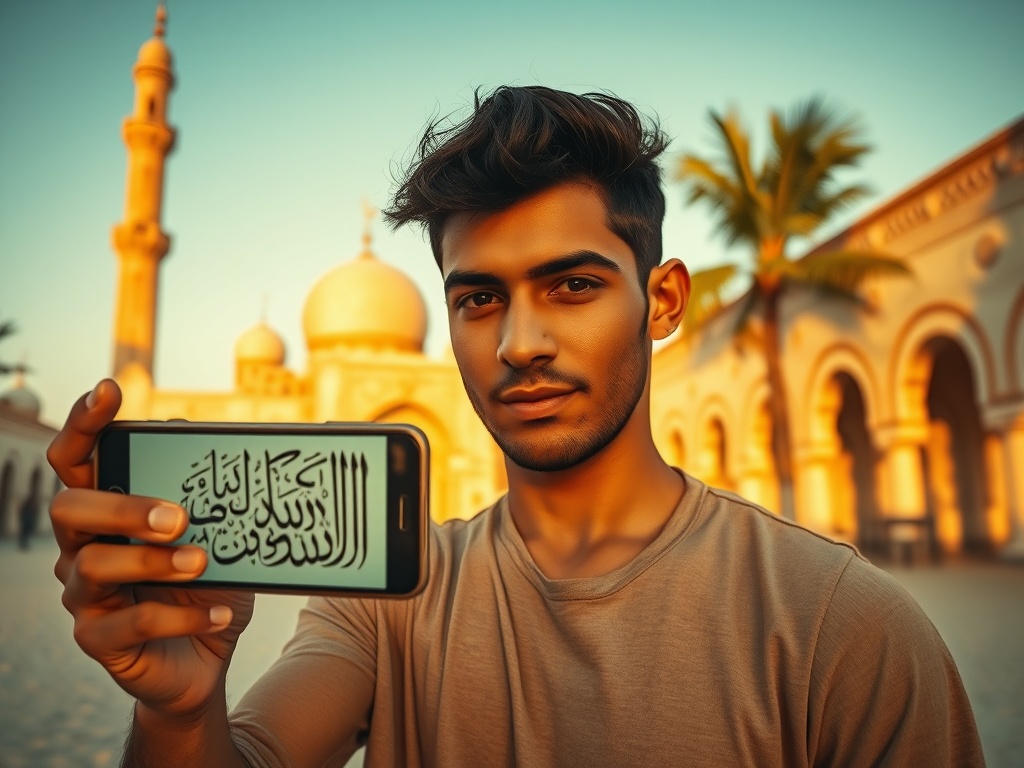
When Your Phone Becomes the New Mosque
In the Maldives, where Islam forms the bedrock of national identity, the emergence of artificial intelligence as a source of religious guidance has sparked a quiet but significant debate. The conversation unfolding across social media platforms reveals deep tensions between tradition and technology, between established religious authority and the democratization of knowledge.
Some voices express vehement opposition to seeking religious counsel from algorithms, arguing that true Muslims should possess sufficient religious understanding to avoid relying on artificial intelligence for matters of faith. This perspective reflects a broader concern about the preservation of religious purity in an increasingly digital world. The underlying fear is that machine learning models, trained on vast datasets from diverse sources, might dilute or distort Islamic teachings.
Yet this technological inevitability cannot be ignored. As one observer notes, people will use these tools regardless of warnings, driven by the convenience and accessibility that digital platforms provide. This creates a fundamental tension in a society where religious interpretation has traditionally been the domain of scholars and established institutions.
The debate extends beyond mere technological adoption to deeper questions about religious pluralism and tolerance. Some participants dismiss calls for multi-faith acceptance as coming from a "tiny wee minority," reflecting the homogeneity of Maldivian society while simultaneously highlighting the challenges of religious discourse in an insular community.
What emerges from these digital exchanges is not just a conversation about AI, but a mirror reflecting broader societal concerns about identity, authority, and change. In a nation grappling with economic pressures, political tensions, and social transformation, the question of how to integrate new technologies while preserving religious values strikes at the heart of contemporary Maldivian life.
The challenge lies in navigating this digital transformation without sacrificing the religious principles that define the nation's character. As artificial intelligence becomes increasingly sophisticated, Maldivians must determine whether these tools will serve as supplements to traditional religious education or become sources of confusion in matters of faith. The resolution of this tension will likely shape religious discourse in the Maldives for generations to come.
— Source fragments: Very true. Large language models of today are not reliable in matters of religion. It's a must for every Muslim to have sufficient understanding of religion to not have to ask llms about matters of religion. But this is inevitable. People will use it anyways because demand is; this is a non issue. no expat that i came across was looking for a church or a temple. this call to multi faith plurality always come from kaafir dhivehin and they are a tiny wee minority