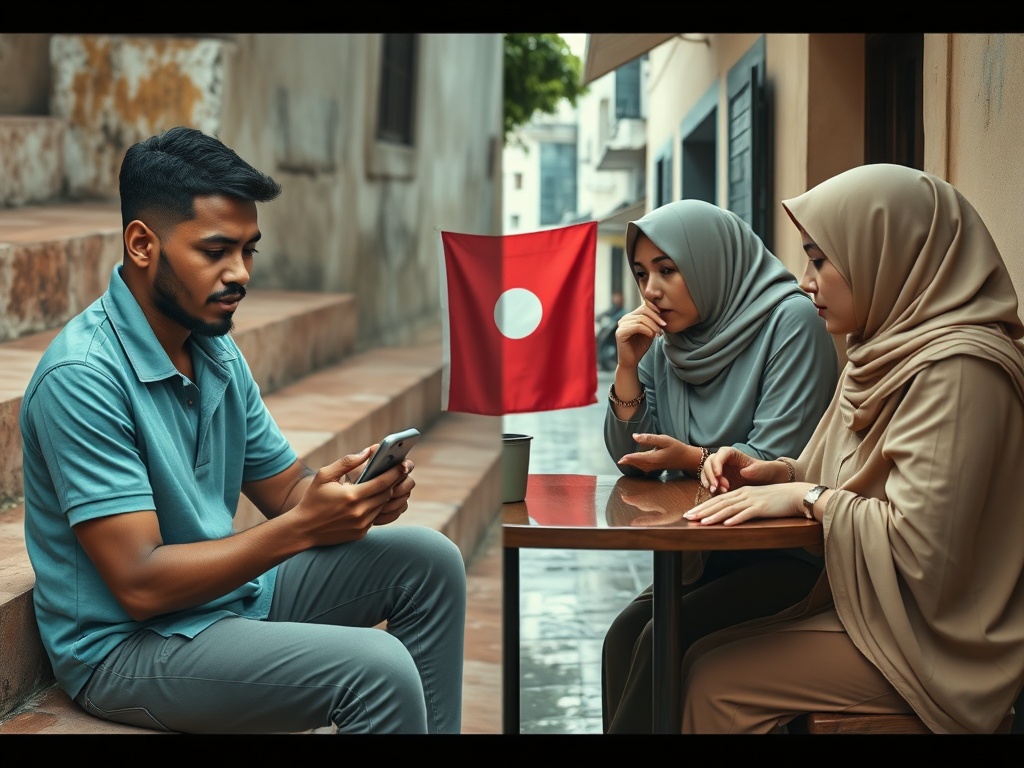
When Your Phone Decides Who You Argue With
In the digital town squares of Maldivian social media, a troubling pattern has emerged—one where the substance of an argument often takes a backseat to the identity of the person making it. This phenomenon cuts across political lines, affecting how we discuss everything from governance to economic policy.
The core issue lies in what observers describe as a tribal approach to truth. Rather than evaluating statements based on factual accuracy or logical coherence, many Maldivians default to a simpler calculation: do I like the person saying this? Does this align with my political or social tribe? If the answer is yes, even demonstrably false claims can gain traction. If no, even well-reasoned arguments face immediate dismissal.
This tendency manifests across multiple domains of public life. In political discourse, supporters of different parties often defend their side's positions regardless of merit, while attacking opponents' views without engaging with their substance. The result is a public conversation that resembles parallel monologues rather than meaningful dialogue.
Economic debates suffer similarly. When discussing the high cost of living or foreign currency shortages, the conversation frequently devolves into partisan blame games rather than substantive analysis of root causes and potential solutions. The same pattern appears in discussions about corruption, housing crises, and healthcare challenges—complex issues that demand nuanced understanding but often receive tribal responses.
The consequences extend beyond political theater. This approach to discourse affects how Maldivians process information about critical national issues. It creates an environment where misinformation can flourish if it comes from the "right" sources, and where valid concerns can be ignored if they originate from the "wrong" ones.
Breaking this cycle requires conscious effort from all participants in public conversation. It means prioritizing evidence over affiliation, substance over symbolism, and constructive engagement over reflexive defense of tribal positions. The health of Maldivian democracy may depend on our ability to move beyond identity-based evaluation of ideas and toward merit-based assessment of arguments themselves.
As the nation faces complex challenges—from economic pressures to governance questions—the need for substantive, truth-oriented dialogue has never been more urgent. The alternative is a public sphere where echo chambers amplify division while silencing the nuanced conversations needed for genuine progress.
— Source fragments: What makes it difficult to have any meaningful dialogue with most Maldivians on X is that we often decide what's right or wrong not based on the content itself, but on whether we like what was said. If you like it, no matter how inaccurate it is, you'll accept it as true; you wanna engage? Try replying on the thread. And say something of substance.