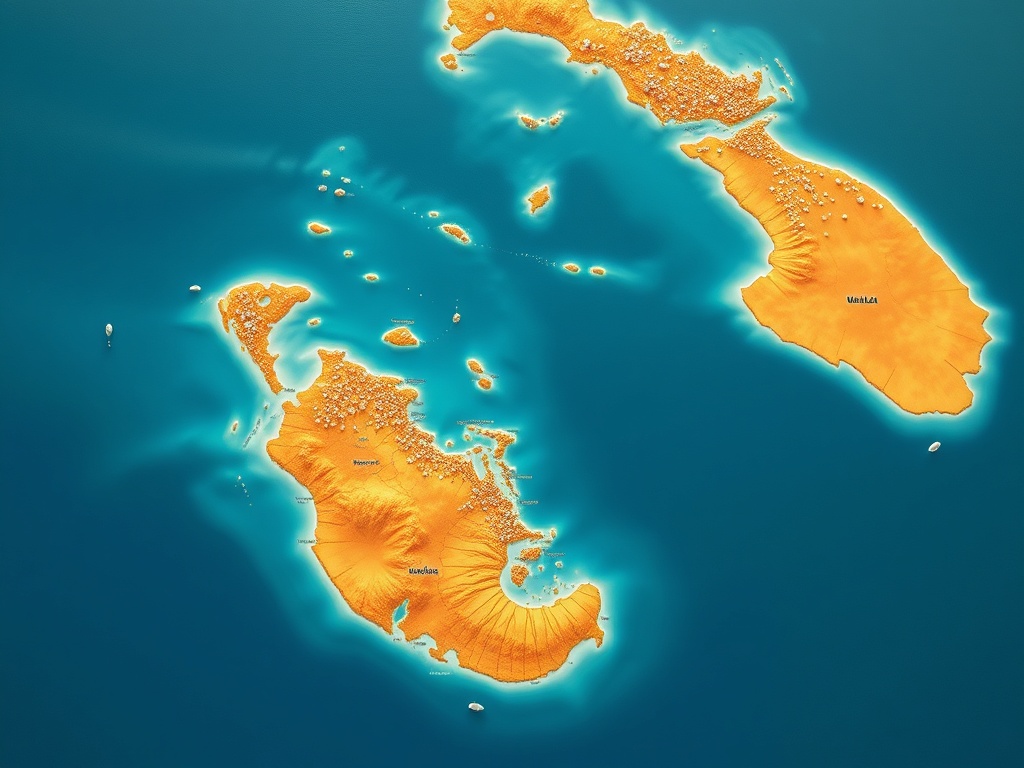
When Your Vote Lives on an Island You Left Behind
In the ongoing evolution of Maldivian democracy, a fundamental question has emerged from public discourse: should voting rights remain tethered to ancestral homelands or reflect the reality of where citizens actually live? This debate touches the core of how political power is distributed across the archipelago nation.
The current system, based on permanent address registration, creates peculiar democratic anomalies. A citizen born in Malé because their island lacked medical facilities may still vote in their ancestral atoll, while long-term residents of the congested capital may have no say in local representation despite years of residence. The contrast with systems in countries like the U.S. and U.K., where electoral constituencies follow current residential addresses, highlights alternative approaches worth examining.
Proponents of residency-based voting argue it would create more responsive representation. If Members of Parliament answered to their actual constituents rather than distant ancestral communities, governance might become more accountable. Yet practical challenges loom large: how would the system track movement between wards like Henveiru and Galolhu? What infrastructure would prevent electoral manipulation? Some suggest a minimum residency period—perhaps two government terms—to establish voting rights in a new constituency.
The conversation naturally extends to parliamentary structure itself. Critics note that the current unicameral Majlis grants MPs unchecked power, leading some to advocate for a bicameral system with an upper house providing atoll-level representation. This would echo historical Maldivian governance while creating necessary checks and balances.
Geographic representation presents another layer of complexity. Current atoll divisions, such as Vaavu Atoll with its small population, might become untenable under residency-based voting. Some propose reducing administrative divisions to 14, updating the historical 13 atolls, which could also reduce parliamentary seats and streamline governance.
The rapid urbanization reshaping Maldives adds urgency to these discussions. Hulhumalé's growth—with calls for Phase 2 to be recognized separately—demonstrates how demographic shifts are outpacing political structures. The capital region's expansion demands fresh thinking about how communities are represented.
What's clear is that electoral reform cannot happen in isolation. It requires parallel strengthening of civil registration systems, transparent administrative boundaries, and public trust in electoral institutions. As one observer noted regarding MP recall mechanisms, accountability systems must evolve alongside representation models.
These conversations reflect a maturing democracy grappling with the tension between tradition and modernization. The outcome will shape not just who gets to vote where, but how effectively the Maldivian state can serve its mobile, evolving population in the decades ahead.
— Source fragments: In countries like U.S, U.K, and most European countries, your electoral constituency is based on your current residential address; If anyone obtaining a residence, there are procedures to apply; voting based on the island of residence; How many years entitles you for a vote?; someone would have had to live in a given constituency for at least two terms; a bicameral parliament with representation for each atoll; Current vaavu atoll would be too small; reduce admin divisions to 14; Hulhumale should be a separate town/island