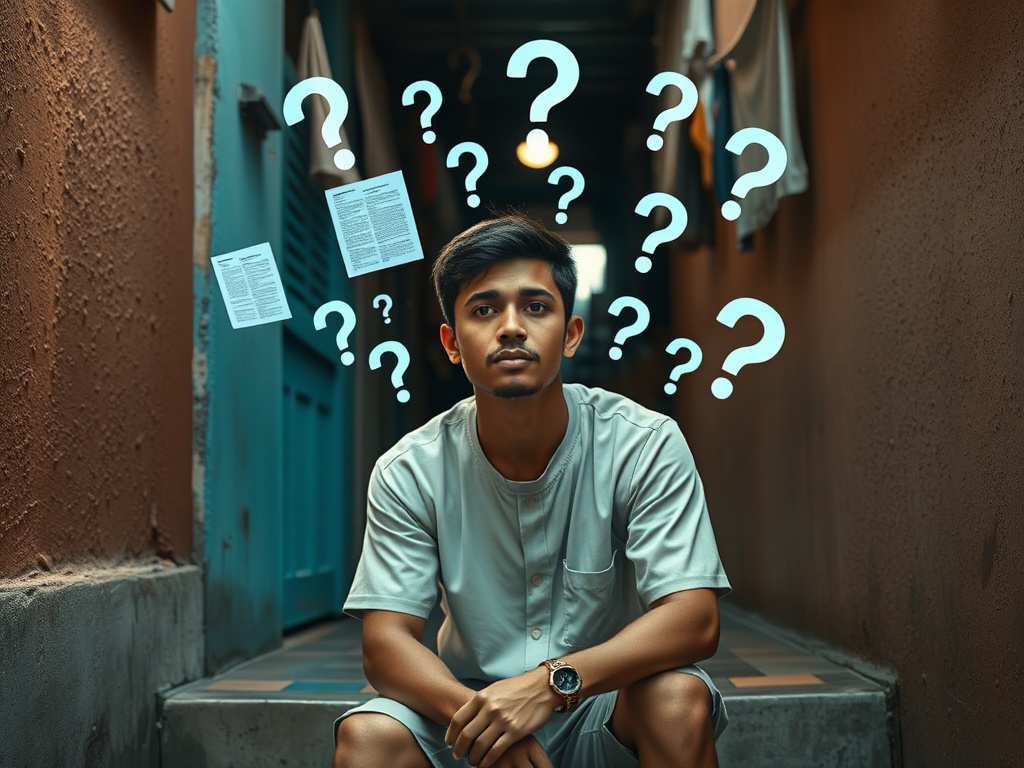
Where Are These Demands Submitted? The Question Echoing Through Maldivian Feeds
In the swirling currents of online information, a simple question echoes through countless comment sections and social media feeds: 'Where are these demands submitted?' This query, born of digital skepticism, represents more than just curiosity—it's a fundamental challenge to the transparency of modern communication.
The repeated requests for sources—'can you show us the source of this?' and 'What is the source of this document?'—reveal a public increasingly wary of unverified claims. This isn't mere cynicism but rather a developed instinct for digital literacy in an environment where misinformation spreads faster than fact-checking can contain it.
The blunt inquiry 'Is this even real?' cuts to the heart of contemporary information consumption. In a world where documents can be fabricated, images manipulated, and narratives constructed with sophisticated tools, the burden of proof has shifted dramatically. The public no longer assumes authenticity but demands verification as a precondition for belief.
Even the observation that 'it's deleted' carries significant weight in the digital age. The ephemeral nature of online content—here one moment, gone the next—creates a landscape where accountability becomes elusive. When information disappears, it leaves behind only questions and suspicions, fueling the very distrust it sought to avoid.
This environment of skepticism exists against a backdrop where institutional trust faces unprecedented challenges. Whether in governance, media, or public information systems, the expectation of transparency has become non-negotiable. The public's insistence on seeing sources represents not just a desire for information, but for the mechanisms behind that information—the how and why of what reaches them.
The shift from passive consumption to active verification marks a significant evolution in public engagement with information. It suggests a population learning to navigate the complexities of digital communication while maintaining critical thinking as their compass. This development, while challenging for content creators and institutions, ultimately strengthens the information ecosystem by raising standards for what constitutes credible communication.
As we move forward in this digital landscape, the demand for sources and transparency will only intensify. The organizations and individuals who embrace this expectation—who build verification into their communication strategies—will be the ones who maintain public trust in an increasingly skeptical world.
— Source fragments: Where are these demands submitted?, can you show us the source of this?, Where can I see the source of this?, What is the source of this document?, Is this even real?, it's deleted. what is it about?