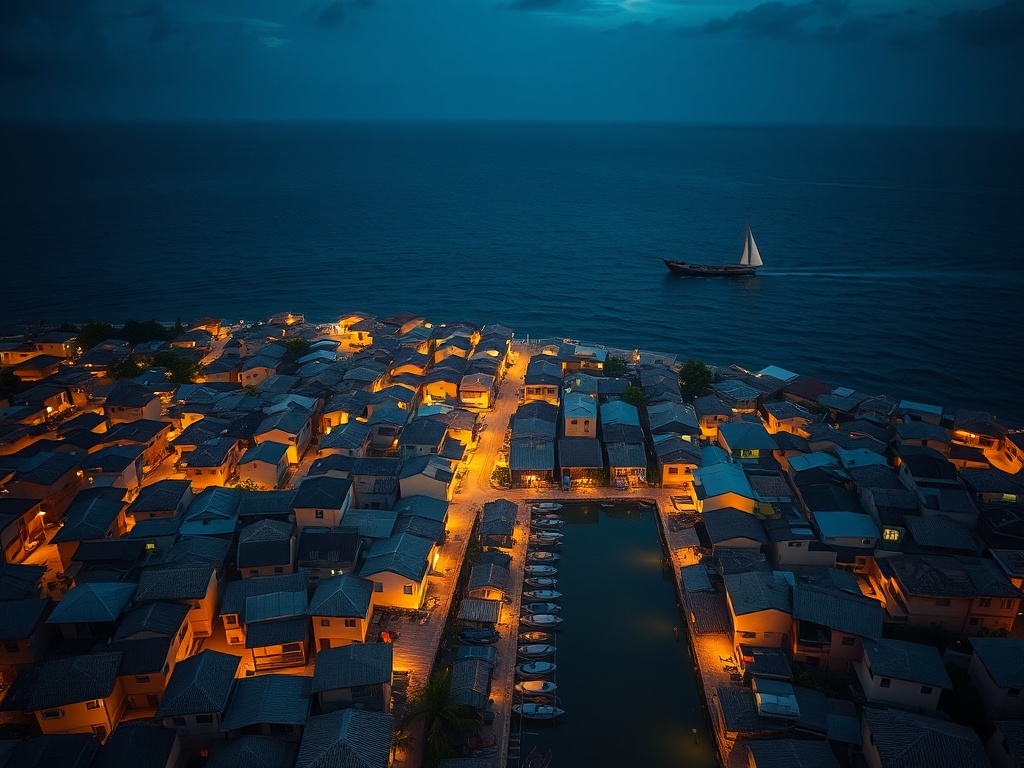
Where Buildings Climb Higher Than Hope in Malé
The sea surrounds us, constant and endless, yet the land we stand on feels increasingly scarce. In the capital, the truth is visible to anyone with eyes—the buildings climb higher, the streets grow tighter, the air thickens with the presence of too many in too little space. It's not that people don't see the congestion; they do. But beneath the visible strain lies a deeper current of demand, one that speaks not just of shelter but of entitlement, of history, of the weight of identity.
Some voices rise, claiming rights based on where they were born—'Male' meeha'—their demands echoing with the expectation of something owed. Others push back, arguing that such distinctions create unfairness, that any Dhivehin should have equal right to settle where they choose, to buy or obtain land without the barriers of birthplace or profession. Between these positions lies the tension of policy: how to distribute limited resources in a way that feels just.
Economic principles whisper warnings—when demand far outstrips supply, artificial controls can warp the market, breeding shadow economies where housing is traded illegally at prices higher than intended. The solution, some suggest, isn't free land but regulated rent, a system that acknowledges scarcity without fueling corruption or bias.
There are schemes praised for their potential—policies designed to solve real problems at lower cost—but their implementation often falters, tainted by unconstitutionality or partiality. The ideal, then, isn't necessarily the abolition of support, but its fair application. A bill that standardizes housing schemes, that requires surveys and national plans, offers a glimmer of hope—a framework that might bind governments to consistency and transparency.
Yet, in the end, the debate returns to a simple, profound question: what does it mean to belong? Is it the soil of one's birth, or the choice of where to build a life? The ocean doesn't discriminate between those who sail it; perhaps the land, in its finite generosity, shouldn't either. In a nation of islands, the dream is not just a roof overhead, but a foundation that feels like home—for everyone.
— Source fragments: Male' is full; people demanding money as Male' meeha; policies must be fair; limitations for free island allocation; good policies implemented unconstitutionally; price ceilings creating black markets; against discrimination in housing criteria; housing vs land distinction; regulating rent vs free land; equal rights for all Dhivehin to settle anywhere