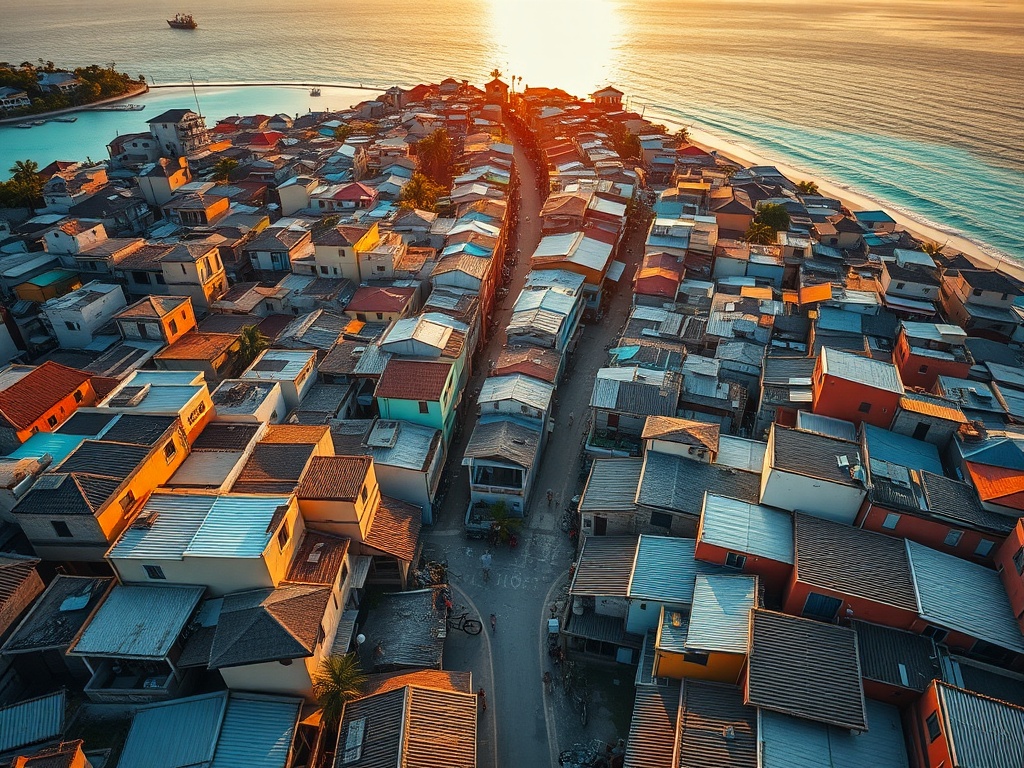
Where Children Play in Malé's Last Inches of Space
The sun beats down on the crowded streets of Malé, where every inch of space carries the weight of competing dreams. 'People have eyes and can see that Malé is full,' someone observes, and indeed, the physical constraints are visible in the narrow alleys where children play and the stacked apartments where families grow. Yet the conversation about land and housing reveals something more profound than mere physical space—it touches on what we believe we're owed, what we deserve, and what makes a place home.
There's a tension between the practical and the principled. Some argue that policies must be fair above all else, that criteria for housing should not depend on where one was born or what profession one holds. The distinction between 'Malé meeha' and 'Raajetherey meeha' becomes not just about geography, but about perceived privilege and historical claim. Meanwhile, others point to the technical realities—that housing is not the same as land, that rent regulation might serve better than free allocation, and that when demand far exceeds supply, artificial price controls can create unintended consequences.
What emerges is a collective yearning for systems that work with human nature rather than against it. The desire for mobility—to be able to settle where one chooses, to sell and move as life demands—reflects a modern Maldivian identity that transcends island boundaries. Yet this exists alongside the recognition that policies, however well-intentioned, can be implemented in ways that feel 'obviously unconstitutional and biased,' undermining their potential benefits.
In the space between these perspectives lies the real challenge: how to create housing solutions that acknowledge both the emotional weight of land and the practical realities of governance. It's not just about putting roofs over heads, but about building communities where fairness isn't sacrificed for expediency, where the land beneath our feet connects us rather than divides us, and where policies serve people rather than political calculations.
— Source fragments: "people have eyes and can see that Male' is full", "policies has to be fair", "don't discriminate among residents on any island", "housing is not the same as land", "rent should be regulated", "not to differentiate between Male' meeha or Raajetherey meeha", "when demand far exceeds supply, setting a price ceiling below the market rate is rarely effective"