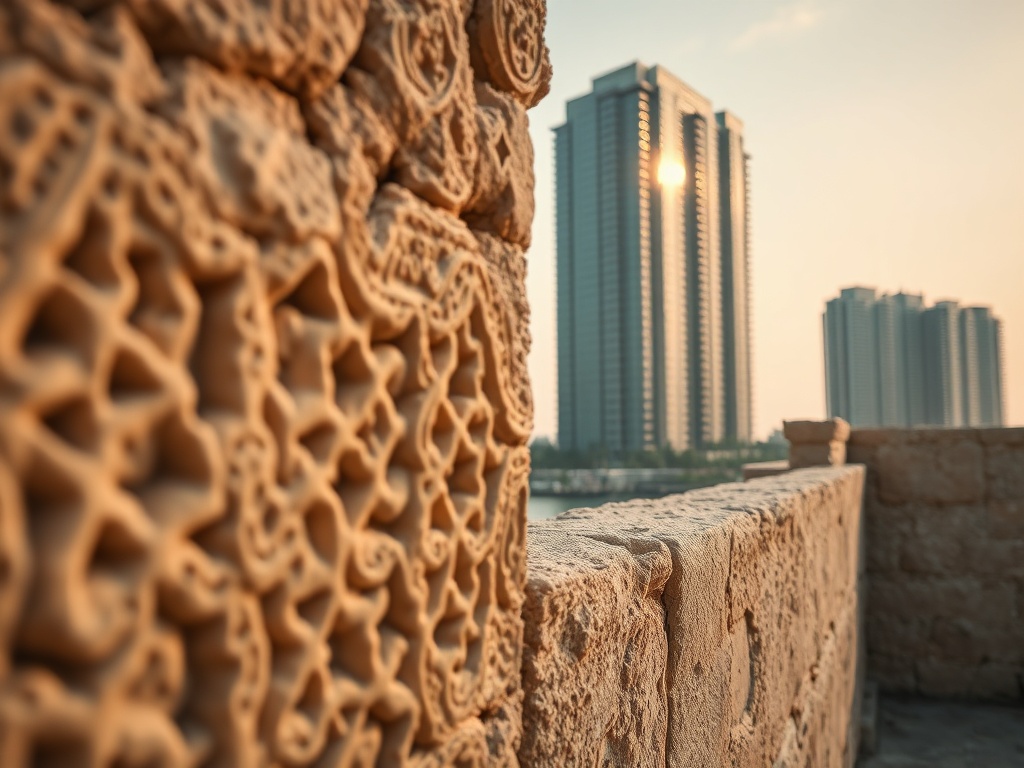
Where Coral Stone Walls Meet Concrete Towers in Malé
In the narrow streets of Malé, where concrete towers now scrape the sky, echoes of another architectural tradition persist in the intricate woodwork of old mosques and the geometric patterns adorning coral stone walls. This distinct Islamic architecture—born from a prohibition against idols—channels creative energy into shapes, geometry, and color rather than statues. It stands as a quiet testament to a cultural principle: that meaning can be found in abstraction, in the spaces between lines, in the harmony of mathematical precision.
This principle extends beyond architecture into the very fabric of Maldivian identity. As one observer noted, certain words and concepts seem woven from the essence of 'Dhiveheenge raajje'—the Maldivian way. There's a resilience here that transcends geography or political affiliation. You can take a Maldivian out of the Maldives, but you cannot extract the cultural DNA that defines them—the 'lalhi aai shahseeyatha alhukan kurun,' that stubborn, proud core that persists through displacement and change.
This cultural steadfastness emerges against a backdrop of significant transformation. With high youth unemployment, rising living costs, and growing foreign influence, many Maldivians are consciously reaffirming their connection to local values rather than looking westward. The declaration 'I do not live in the west and will never' reflects this deliberate anchoring in Maldivian soil, even as global currents pull at the nation's edges.
Meanwhile, questions about cultural preservation intersect with contemporary ambition. When someone asks if a particular song could win an international competition in 2028, they're really questioning whether Maldivian art can compete on global stages while retaining its distinctive character. It's the eternal tension between authenticity and appeal, between preserving tradition and embracing innovation.
In a nation where political loyalties shift with the monsoons—where PNC, MDP, and other parties vie for dominance—this cultural identity provides something more stable than political affiliation. It's the geometric pattern beneath the surface noise, the architectural principle that gives form to a nation's soul, regardless of who temporarily occupies the seats of power.
— Source fragments: Islamic architecture distinct due to prohibition of idols; artisans focused on geometry and color; cultural resilience ('cannot take the Maldivian out of the Maldivian'); rejection of Western living; linguistic identity ('Dhiveheenge raajje')