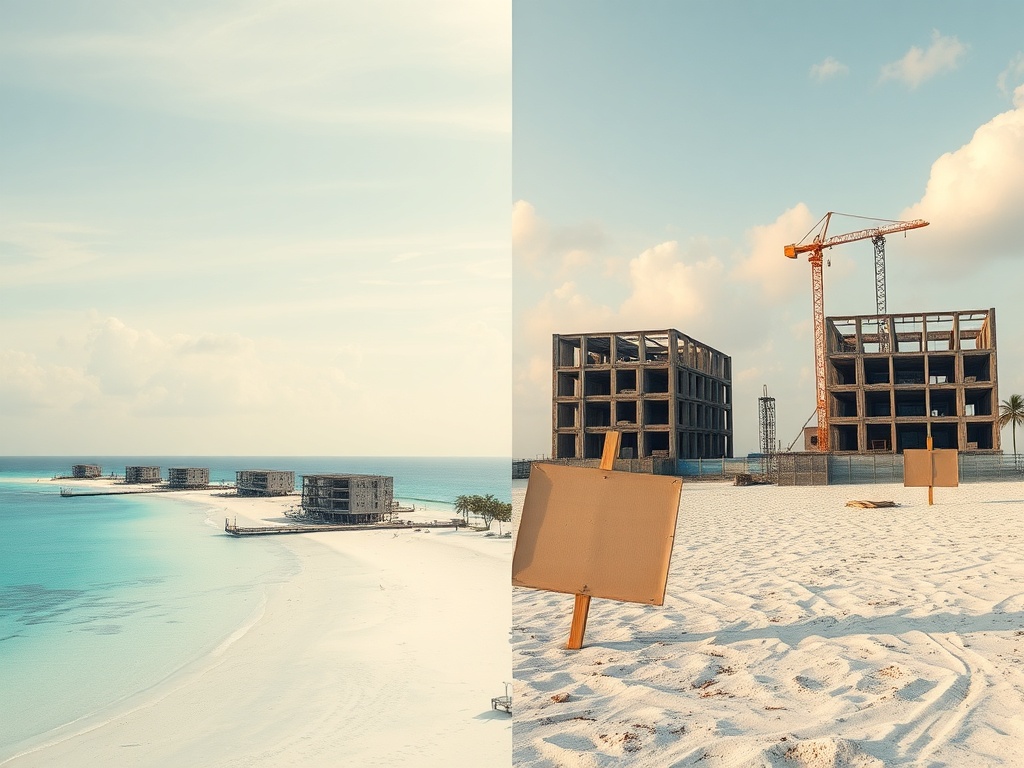
Where Empty Construction Sites Meet Maldivian Waters
The Maldives stands at a crossroads of extraordinary potential and frustrating stagnation. With abundant natural resources, a small population, and internal peace, this island nation possesses all the ingredients to become one of the world's wealthiest and happiest societies. Yet repeatedly, politics intervenes to decide the nation's fate, leaving citizens to wonder what might have been.
This political paralysis manifests in multiple ways. Local governance becomes reduced to symbolic gestures—digging graves and cutting trees—rather than substantive development. Major infrastructure decisions languish in budgetary limbo, caught between administrations and political parties. The cycle continues: one government identifies a need but lacks funding, the next acquires financial freedom but lacks will, and subsequent administrations inherit unresolved problems.
The political landscape has become increasingly fragmented. Party loyalties shift, factions emerge, and leadership styles range from uncompromising to ineffective. Some politicians employ disability as seasonal photo opportunities rather than implementing sustainable support systems for vulnerable communities. The public grows weary of these performances, recognizing them as public relations exercises rather than genuine commitment.
What emerges is a troubling disconnect between political rhetoric and tangible progress. When leaders use analogies about understanding struggles only through personal experience, they inadvertently highlight how distant governance has become from daily realities. The comprehension gap isn't with the public but within the political class itself, who fail to translate their privileged positions into meaningful action.
Amidst this landscape, citizens express stark preferences—any alternative seems preferable to leadership they perceive as hypocritical or incompetent. Yet this binary thinking offers little pathway forward. The current political dynamics, characterized by personal rivalries and party fragmentation, seem incapable of delivering the national victory that so many crave.
The fundamental question remains: can Maldivian politics evolve from deciding the nation's fate to enabling its destiny? With resources waiting to be harnessed and a population eager for progress, the ingredients for transformation exist. What's missing is the political will to rise above partisan interests and personal ambitions to serve the greater national good. Until that happens, the Maldives will continue to be a nation of unfulfilled promise, its potential held hostage by the very systems meant to liberate it.
— Source fragments: very true. we have the resources, low numbers, internal peace, everything to make this country one of the richest and most happiest people ever. But ultimately politics decides our fate; digging graves and cutting trees is all he has to show; Politicians use disabled kids as props on that one day of the year every year. They don't really care for the vulnerable. Its just PR; Nasheed hasn't given up yet! His way or the highway way; Anybody is still better than He was the worst president ever