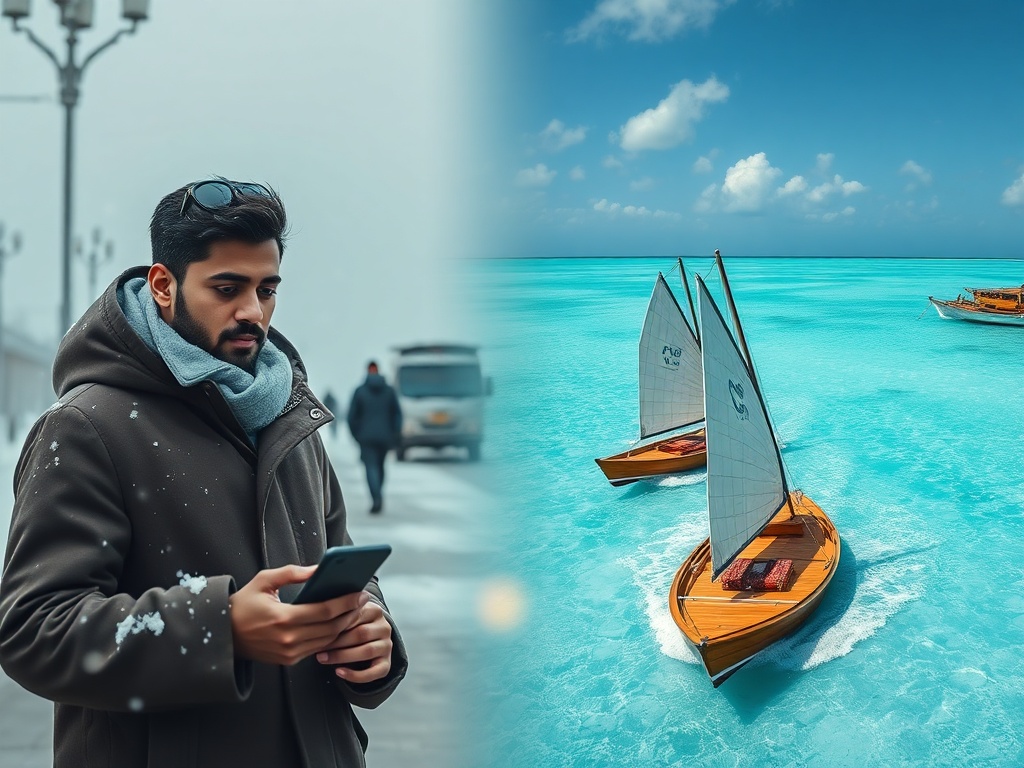
Where Is My Bro? The Question That Crosses Oceans
In the quiet hours between time zones, a question echoes across messaging apps and social media platforms: 'Where is my bro?' The query is simple, but the answer often reveals a more complex story of migration, distance, and the slow unraveling of connections that once defined Maldivian community life.
Across the scattered islands of the Maldives, a quiet exodus has been underway for years. Young professionals, families seeking better education, and those chasing economic stability have found new homes in North America, Europe, and neighboring Asian countries. The phenomenon has created what some call 'the disconnected diaspora' – Maldivians living physically abroad while maintaining digital ties to home.
Most of them now live in the United States or Canada, drawn by educational opportunities, career prospects, and the promise of stability that feels increasingly elusive back home. The migration patterns reveal a telling story: when talented youth see limited pathways at home, they create new ones abroad. The brain drain is not just about losing skilled workers; it's about losing the very people who could drive innovation and change in Maldivian society.
This geographical separation creates a peculiar form of relationship with the homeland. Social media becomes both bridge and barrier – allowing connection while emphasizing distance. The casual 'Where is my bro?' inquiry often uncovers that the person in question has been overseas for years, their absence unnoticed until a specific need for connection arises.
There's an unspoken tension in these digital interactions. Those who remain in the Maldives sometimes view the diaspora with a mix of admiration and resentment – admiration for their success abroad, resentment for what feels like abandonment. Meanwhile, those overseas grapple with their own complicated feelings: pride in their Maldivian identity mixed with the practical reality of building lives elsewhere.
The phenomenon raises deeper questions about what it means to be Maldivian in an increasingly globalized world. Is Maldivian identity tied to geography, or can it be maintained across oceans and time zones? How do those who leave continue to contribute to their homeland, and what obligations do they bear to the communities they left behind?
As the diaspora grows, so does the need for more meaningful connections than occasional social media check-ins. Some expatriate communities have formed formal associations, creating support networks while maintaining cultural ties. Others participate in Maldivian politics and social issues from afar, their perspectives shaped by both their roots and their new environments.
The challenge for the Maldives is not just to stem the flow of talent leaving its shores, but to create conditions that might someday lure some of it back. Until then, the question 'Where is my bro?' will continue to be answered with locations thousands of miles away, a testament to both the ambitions of Maldivian youth and the work yet to be done at home.
— Source fragments: Most of them live in US or Canada, Where is my bro