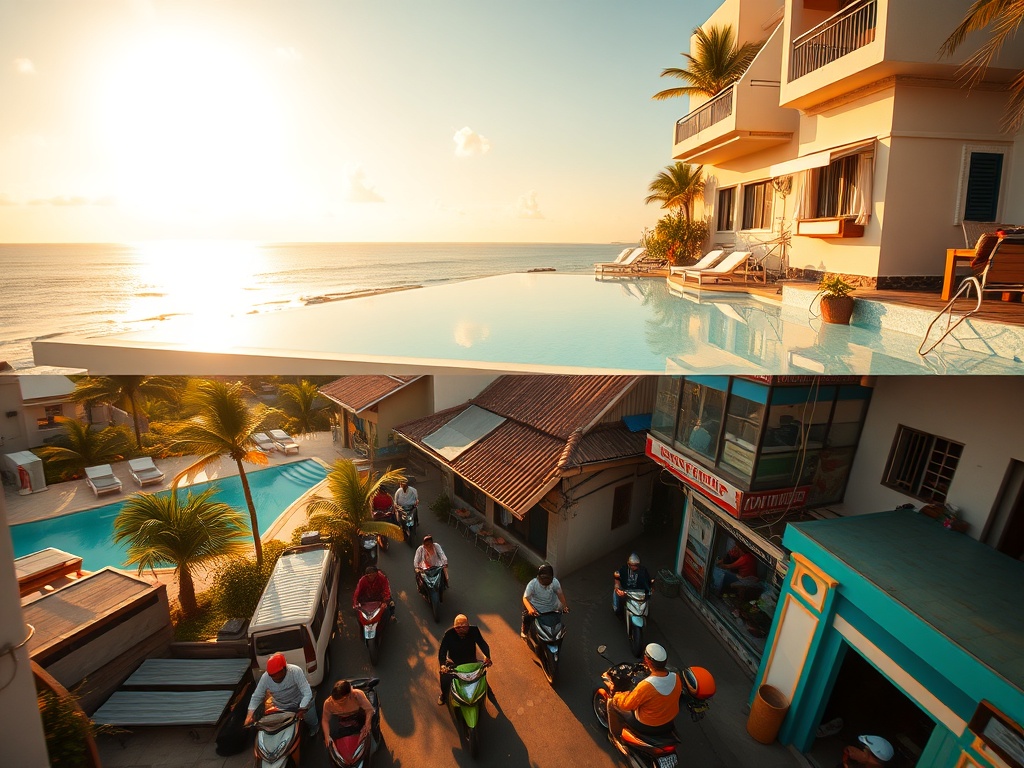
Where Luxury Resorts Rise, Maldivian Streets Still Crowd
The Maldivian economy, long celebrated for its rapid growth fueled by a booming tourism sector, now faces a moment of sober reckoning. Across social media and public discourse, a chorus of voices points to a troubling divergence: between the immense wealth generated by the industry and the lived reality of most citizens. The debate is no longer just about growth percentages, but about who truly benefits from the nation’s primary engine of prosperity.
At the heart of this unease is a perception of deeply entrenched inequity. Critics argue that economic policies and government moves repeatedly appear to favor a small, well-connected class. The discussion around land development, for instance, highlights a fundamental anxiety: that only the wealthiest families possess the capital to develop land without relying on loans, a system that seems designed to perpetuate wealth concentration. This creates a cycle where prime real estate and economic opportunities flow to a "privileged few," leaving the majority feeling locked out of their own country's success story.
This sentiment is sharpened by the contrast with broader economic indicators. A World Bank forecast of 3.9% GDP growth for 2026 feels jarringly low for a nation accustomed to more dynamic expansion, prompting questions about the government's economic stewardship. The national banking system, a forced USD forex policy, and a cap on remittances are seen not as isolated technical measures, but as symptoms of a deeper malaise—a system degrading the Maldivian Rufiyaa and leaving sections of the population, like the Indian diaspora, in the lurch.
Compounding this is a historical grievance. While the tourism pioneers, predominantly from Male’, are credited with transforming the economy, their legacy is double-edged. A poignant counter-narrative suggests they also played a pivotal role in dismantling other potential economic pillars, like the shipping industry, which some believe could have rivaled or even surpassed tourism. This historical perspective fuels the current frustration; it’s not just about present inequality, but a sense that alternative paths to prosperity were deliberately closed off.
The result is a palpable tension between the glittering resort economy and the struggles of the main population. The narrative of "forced economic migration" to the Male’ region underscores a harsh reality where opportunity is geographically and economically concentrated. When the economy is already struggling, the introduction of policies that may further burden it feels like a misstep, amplifying calls for a more equitable and strategically sound approach to national development.
Ultimately, the conversation is shifting from pure economic metrics to a more profound question of economic justice. It is a debate about capacity, fairness, and the very soul of the Maldivian development model. The challenge now is to build an economy where the tide of tourism prosperity lifts all boats, not just the yachts.
— Source fragments: "Inequitable wealth distribution… in favor of a privileged few", "World Bank forecasts 3.9% GDP growth for 2026. This is so low", "Only the wealthiest families will be in a position to develop the land", "they also played a pivotal role in destroying the shipping industry", "The reality is majority of people are in Male’ region by forced economic migration"