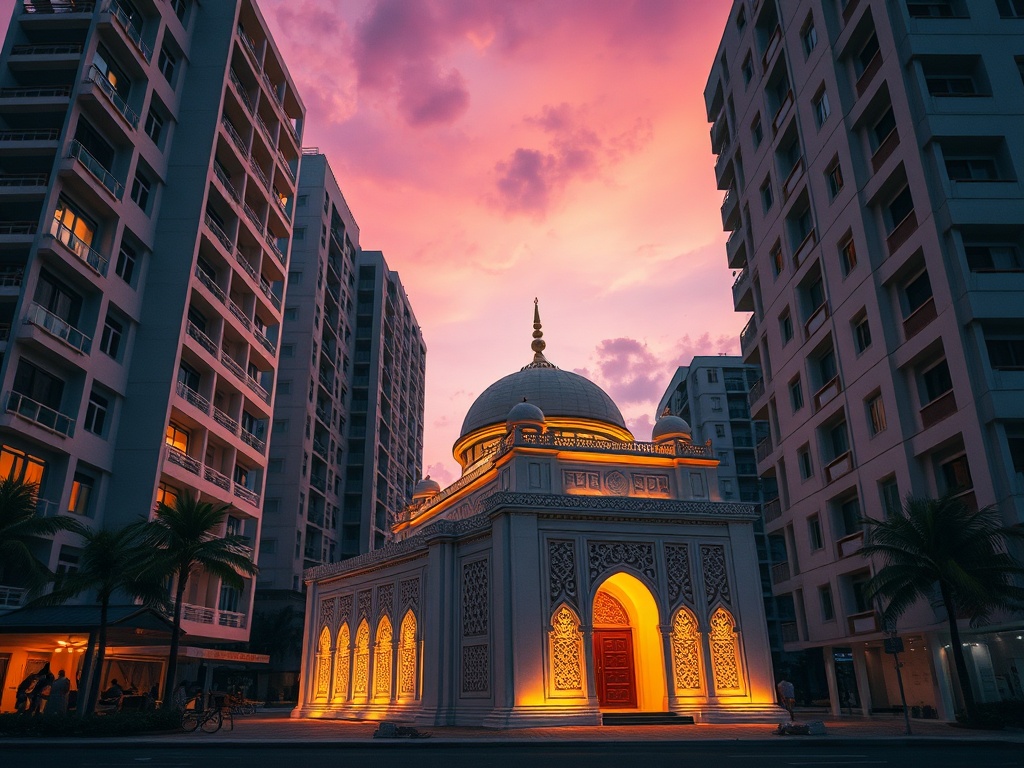
Where Maldivian Faith Meets the Modern World
In the Maldives, where Islam forms the bedrock of national identity, conversations about religious authenticity and continuity resonate with particular urgency. The debate over religious schools of thought reveals deeper tensions between preservation and adaptation that mirror the nation's broader societal challenges.
Some voices argue that religious traditions must be understood as living continuities rather than static relics. They maintain that Islamic schools of thought represent evolving interpretations that maintain connection to their origins while adapting to new contexts. This perspective sees religious identity as an unbroken chain stretching back through generations of scholars and practitioners.
The discussion often centers on whether modern movements represent breaks with tradition or natural developments within it. When critics label certain groups as deviations from established paths, defenders counter that all religious traditions undergo transformation while maintaining essential continuity. This mirrors broader Maldivian concerns about preserving cultural and religious identity amid rapid modernization and external influences.
For many Maldivians, Islam represents more than a seventh-century revelation—it embodies the eternal faith of prophets throughout history. This understanding provides a framework for navigating contemporary challenges while maintaining spiritual authenticity. In a nation grappling with political polarization, economic pressures, and social transformation, these religious discussions reflect deeper questions about identity and continuity.
The conversation takes on particular significance in a country where 100% of citizens identify as Muslim, yet face complex modern challenges. As Maldivians contend with housing crises, healthcare inadequacies, and economic pressures, their religious identity provides both comfort and complication. The debate over religious authenticity becomes a microcosm of larger questions about how tradition adapts to modernity while preserving its essential character.
These discussions unfold against a backdrop of political tension and governance challenges, where the search for authentic guidance mirrors the broader societal quest for stable leadership and transparent institutions. Just as religious traditions must balance continuity with relevance, the nation seeks pathways that honor its heritage while addressing contemporary realities.
— Source fragments: Madhabs aren't like that. They are a continuation of the tradition even if it becomes different; Muslims do not believe that Islām was revealed in the 7th century CE, we believe it to be the faith of Adam & all of God's messengers