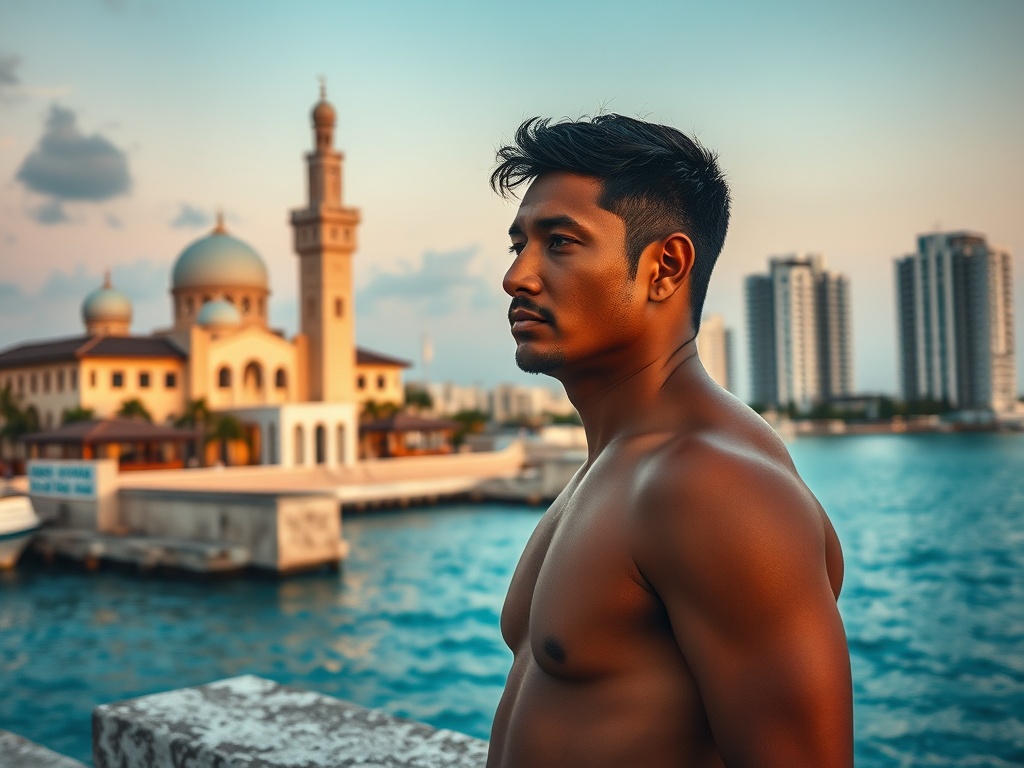
Where Maldivian Muslims Draw the Line on Modeling
In the ongoing conversation about cultural boundaries and religious identity in the Maldives, a recent modeling controversy has sparked intense debate about where Maldivian Muslims draw the line between global trends and Islamic principles. The discussion reveals a society grappling with its place in a rapidly globalizing world while maintaining its religious foundations.
The core argument emerging from this dialogue centers on the distinction between awareness and acceptance. Critics of certain modeling practices argue that Maldivians are fully aware of global fashion and modeling industries, but consciously choose to avoid what they consider religiously prohibited activities. This position reflects a broader pattern in Maldivian society where global awareness doesn't necessarily translate to cultural adoption when religious principles are at stake.
The conversation has taken on historical and theological dimensions, with participants drawing parallels to biblical narratives about idol worship and divine punishment. These references, while metaphorical, highlight the seriousness with which some Maldivians view what they perceive as cultural transgressions. The intensity of these comparisons underscores how deeply religious identity informs public discourse in the 100% Muslim nation.
Meanwhile, the discussion has expanded to include observations about religious minorities in other Muslim-majority countries, suggesting a comparative framework for thinking about religious accommodation and protection. This indicates a developing sophistication in how Maldivians conceptualize religious diversity within Islamic governance structures.
The debate reflects broader tensions in contemporary Maldivian society, where rapid modernization and global connectivity challenge traditional religious boundaries. As the country navigates complex foreign relations and economic pressures, these cultural conversations serve as proxy battles for larger questions about Maldivian identity in the 21st century.
What emerges most clearly is that for many Maldivians, religious principles provide a stable foundation in a changing world. The modeling discussion, while specific in its focus, touches on universal questions about how traditional societies maintain their values while engaging with global culture. The passionate responses suggest that these questions remain central to the Maldivian experience, even as the country continues to evolve economically and politically.
— Source fragments: Religious objections to modeling practices, awareness vs acceptance of global trends, historical religious parallels, comparative religious accommodation