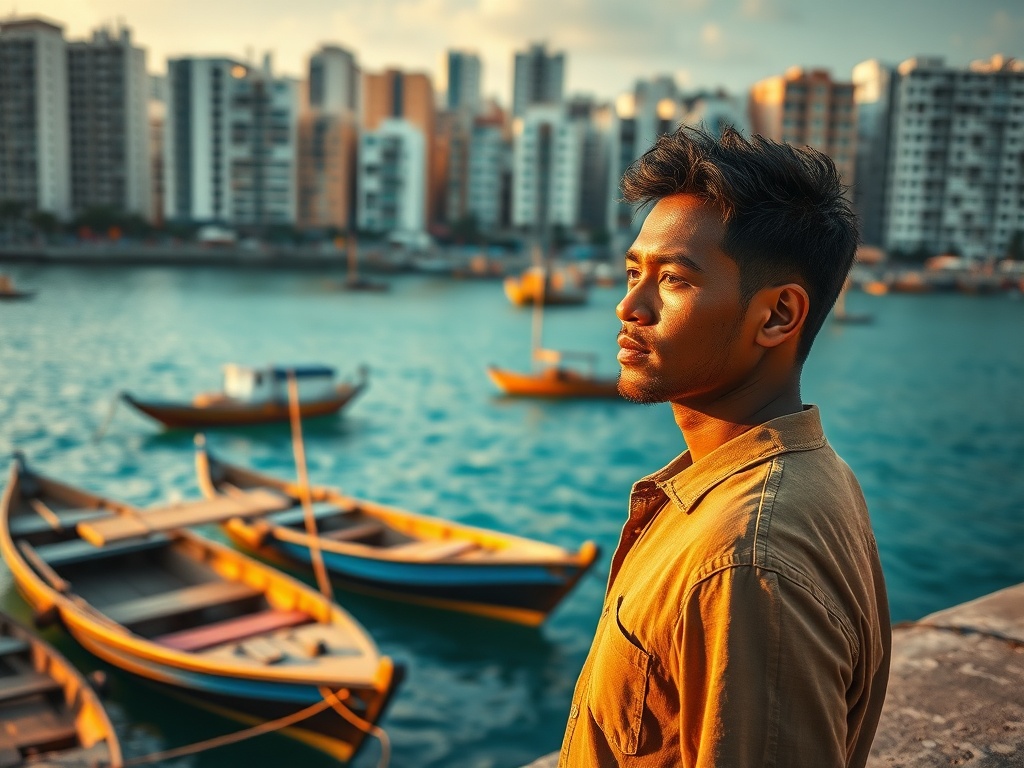
Where Maldivian Youth Watch Fishing Boats From Crowded Malé Streets
In the crowded streets of Malé, where the scent of saltwater mixes with diesel fumes, young Maldivians navigate a landscape of shrinking opportunities. The conversation around job creation has taken on renewed urgency as unemployment persists and educational pathways fail to align with economic realities. The distinction between merely providing employment and creating genuine opportunity has become central to understanding the nation's development challenges.
When politicians speak of job creation, they often reference statistics and employment numbers. Yet for many Maldivians, particularly the youth grappling with drug use and limited prospects, the question remains: creating opportunities for what? The answer lies not in the quantity of jobs, but in their quality, sustainability, and alignment with individual aspirations. The tourism industry, while generating foreign exchange, often fails to provide career progression or meaningful skill development for local workers, while resort owners frequently park profits abroad rather than reinvesting in local communities.
The current economic model, characterized by heavy import reliance and foreign currency shortages, creates a precarious foundation for genuine opportunity. Expatriate workers fill many positions, creating competition with locals and draining foreign currency through remittances. Meanwhile, the bloated public sector offers politically appointed positions that do little to build sustainable careers or develop national capacity.
Meaningful opportunity requires more than employment statistics—it demands pathways that connect education to viable careers, that offer fair compensation relative to the high cost of living, and that provide dignity and purpose. The debate around minimum wage policies in other contexts highlights this tension between simply putting people to work and ensuring that work provides a livable standard.
In the Maldives, where government housing projects are politicized and subsidized flats are often subleased for profit by absentee leaseholders, the connection between economic opportunity and social stability becomes clear. When young people cannot see a future for themselves in their own country, when they cannot afford housing or envision starting families, the social contract frays.
The challenge for Maldivian policymakers extends beyond creating jobs to creating ecosystems where entrepreneurship can flourish, where skills are valued and developed, and where economic participation translates into improved quality of life. This requires addressing the structural issues—from education reform to combating corruption—that currently constrain genuine opportunity.
As the nation grapples with these questions, the measure of success will not be in the number of positions filled, but in whether those positions lead to fulfilled lives, stable communities, and a sense of national progress shared by all Maldivians.
— Source fragments: Creating opportunities for people is a good alternative to what? People gave me jobs i never know