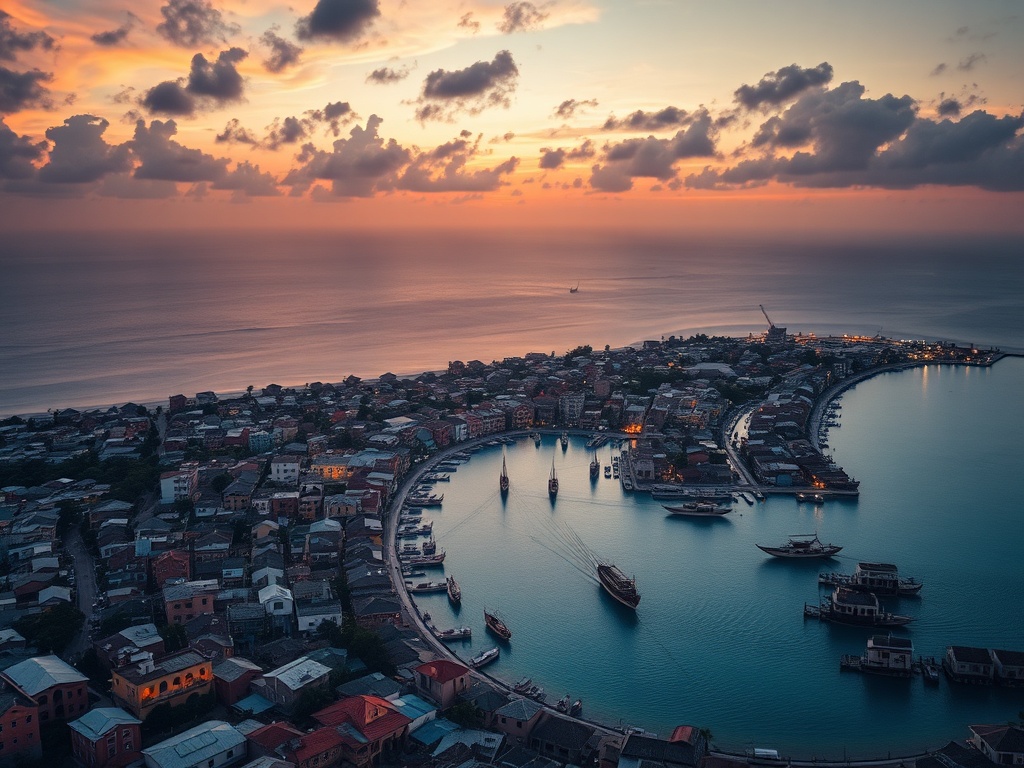
Where Malé's Lights Twinkle and the Housing Debate Rages
The sea has always been our first home, the rhythm of waves our constant companion. Yet lately, another rhythm pulses through our islands—the rhythm of debate about land, housing, and what it means to belong.
'People have eyes and can see that Malé is full,' someone observes, and indeed they do. The capital's shoreline grows more crowded each year, buildings climbing skyward where once the horizon stretched uninterrupted. But the conversation isn't really about space alone—it's about fairness. The demand isn't merely for square meters of land but for equitable treatment, for policies that don't discriminate based on where one was born or what profession one holds.
There's a practical wisdom in recognizing that 'when demand far exceeds supply, setting a price ceiling below the market rate is rarely effective.' We've seen how well-intentioned measures can create unintended consequences—black markets where housing units are rented illegally at higher prices, defeating the very purpose of regulation. The economic principle echoes what fishermen have known for generations: you cannot command the tides, only learn to navigate them.
Some argue passionately against free land for anyone, while others advocate for regulated rent as the more sustainable solution. The distinction between housing and land becomes crucial—one provides shelter, the other represents permanence, heritage, possibility. 'If you can't yourself wean out of the land and use it for anything else then what is it?' someone asks, touching on the fundamental question of utility versus entitlement.
The most compelling vision emerges from those who imagine a Maldives where 'any dhivehin who wants to settle in any island shall be able to buy or obtain land for that purpose.' Not as a gift, but as an opportunity—with the freedom to sell or move as life circumstances change. This reflects the migratory nature of our seafaring ancestors, who understood that home could be both fixed and fluid.
Perhaps the real challenge isn't designing the perfect policy but creating systems that standardize housing schemes while respecting our diversity. A National Development Plan that acknowledges both the practical realities of supply and demand and the deeper need for belonging. Because in the end, the space between land and housing is where we build not just structures, but communities—and that requires more than concrete and policy papers. It requires wisdom as deep as our waters.
— Source fragments: Malé is full; policies must be fair; don't discriminate among residents; housing vs land distinction; regulated rent vs free land; standardizing housing schemes; demand exceeding supply challenges