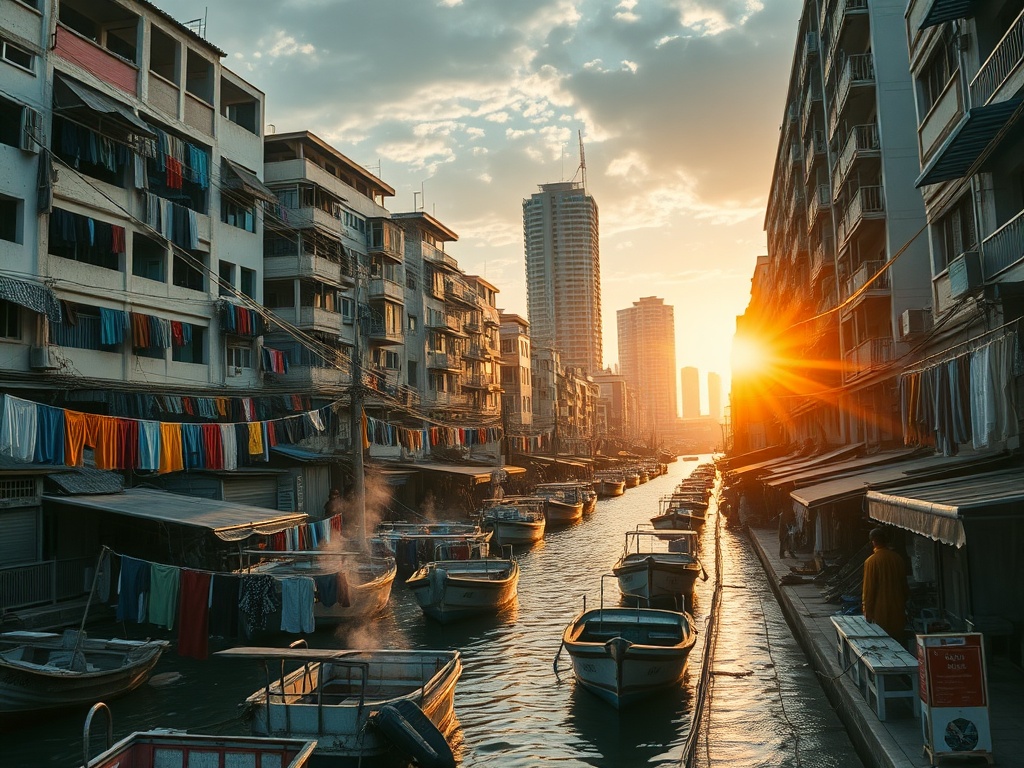
Where Malé's Skyward Buildings Cast Long Shadows
The sea breeze carries more than salt these days. It carries the weight of expectations unmet, of promises that dissolve like morning mist over the lagoon. In the narrow alleys of Malé, where buildings strain skyward as if trying to escape their foundations, conversations hum with a particular kind of anxiety—the kind that comes from watching paradise become increasingly expensive to inhabit.
Young men gather at the harbor wall, their laughter sometimes too loud, their eyes scanning horizons that offer little beyond the familiar rhythm of incoming ferries. They speak of jobs that don't materialize, of qualifications that seem to mean less with each passing season. The education they worked for feels like a key to a lock that no longer exists.
In the shops, the prices tell their own story. The tuna that once fed families now costs what a day's labor might bring. The simple act of buying vegetables becomes a calculation—how much to sacrifice for tonight's meal, what to forgo for tomorrow's. The shopkeepers watch with sympathetic eyes, knowing their own shelves are stocked on credit, their own futures uncertain.
At the hospital, the queues form before sunrise. People clutch referral papers like talismans, hoping for treatment that might not come, or medication that may be out of stock. The national health insurance, meant to be a safety net, sometimes feels like a web of complications—another system to navigate in lives already crowded with bureaucratic hurdles.
Yet life persists with a stubborn grace. Fishermen still mend their nets with practiced hands. Mothers still find ways to feed their families with creativity born of necessity. The call to prayer still cuts through the tension five times daily, a reminder of rhythms deeper than political currents.
The real story of these islands isn't written in official reports or political speeches. It's written in the tired shoulders of construction workers building towers they'll never live in, in the determined eyes of students studying by dim light, in the resigned sighs of elders who remember when the sea felt more generous.
We live in the space between what is and what could be, between the postcard perfection and the daily struggle. The beauty of these islands remains undeniable—the way light dances on water at dusk, the particular blue of a lagoon after rain. But beauty alone cannot fill stomachs or calm anxieties. We navigate these tensions like sailors reading shifting winds, hoping for calmer waters ahead.
— Source fragments: High cost of living, youth unemployment, inadequate healthcare, housing crisis, medicine shortages, educational/job opportunities, import reliance