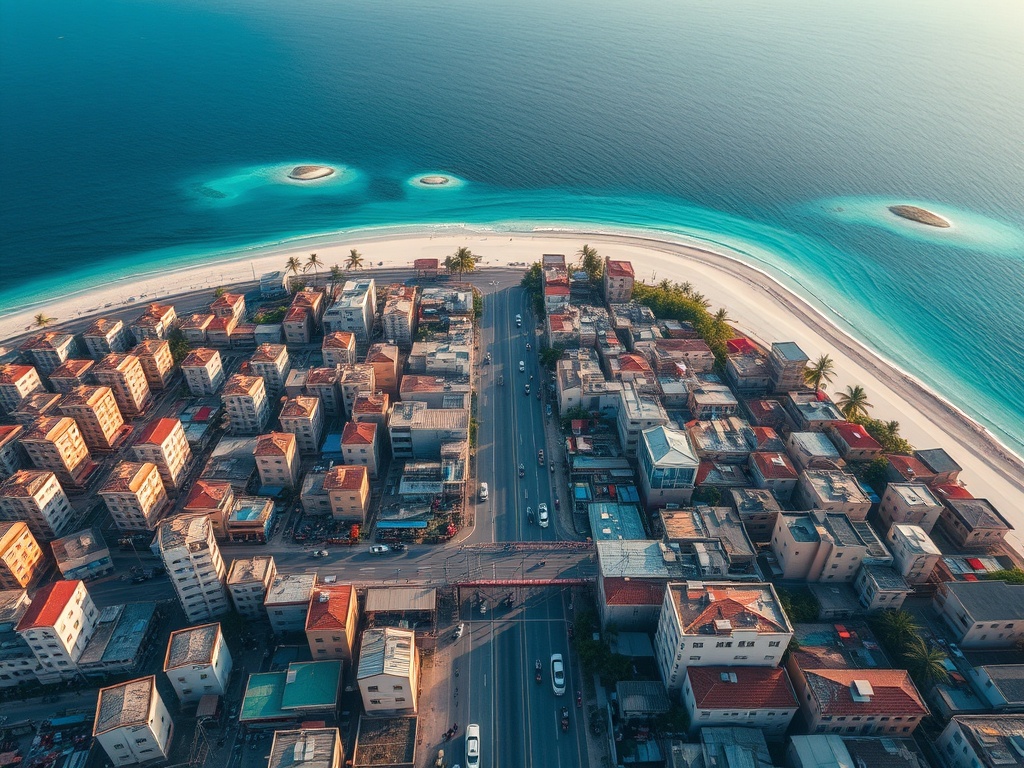
Where Male's Streets End, the Decentralization Debate Begins
The transformation of Male' from a closely-knit island community into a densely packed urban center has sparked a fundamental debate about identity, governance, and the future of Maldivian development. Critics argue that the capital has lost its essential character—what some call the "Male'ness" of Male'—becoming instead a congested, car-choked urban area where the original island spirit has been paved over by rapid, often poorly planned development.
The decision to concentrate government functions and economic activity in Male', rather than following recommendations to move key institutions to Laamu Atoll, represents what many see as a historic misstep by political elites. This centralization has created what one observer describes as "a mess rather than a city"—a place where garage spaces and parking lots compete with living spaces, and where urban planning seems to have surrendered to corporate interests.
The heart of the controversy lies in the tension between centralized control and decentralized development. Proponents of decentralization argue that maintaining 200 scattered communities with duplicated infrastructure represents an unsustainable financial burden. They envision instead a "dual city nation" approach where strategic development of regional hubs could alleviate pressure on the capital while spurring growth in underdeveloped regions.
Technology enables decentralized systems that could distribute government services and economic opportunities more evenly across the archipelago. Yet political will remains the missing ingredient. Critics point to the financial incentives that keep power concentrated—the banking relationships, the loan structures, and the political economy that benefits from centralized control.
The human cost of this centralization manifests in forced migration patterns that compel citizens to live as renters in congested conditions rather than enjoying dignified living spaces in their home islands. The debate extends to governance models, with calls to free developments like Hulhumale from corporate control and establish proper elected councils that would give residents meaningful representation.
At its core, this isn't merely an urban planning discussion but a question about the kind of society the Maldives wants to build. Will it continue down the path of congested living with centralized services, or embrace a decentralized model that distributes opportunity and preserves the unique character of island communities? The answer may determine whether Male' can reclaim its identity while creating a more sustainable future for all Maldivians.
— Source fragments: Male' has lost its identity; Very-cumming in Male was the biggest blunder; Moving the capital would create a dual city nation; We need decentralized system; I am upset because we promote congested living; Hulhumale should be freed from corporate grip; problem is centralization; It's not a city it's a mess