Where Market Stalls End and National Identity Begins
In the quiet of a Malé household, a simple truth resonates: even pets must learn boundaries. This domestic wisdom mirrors larger conversations unfolding across the archipelago, where lines are being drawn, tested, and redefined in everything from market stalls to national identity.
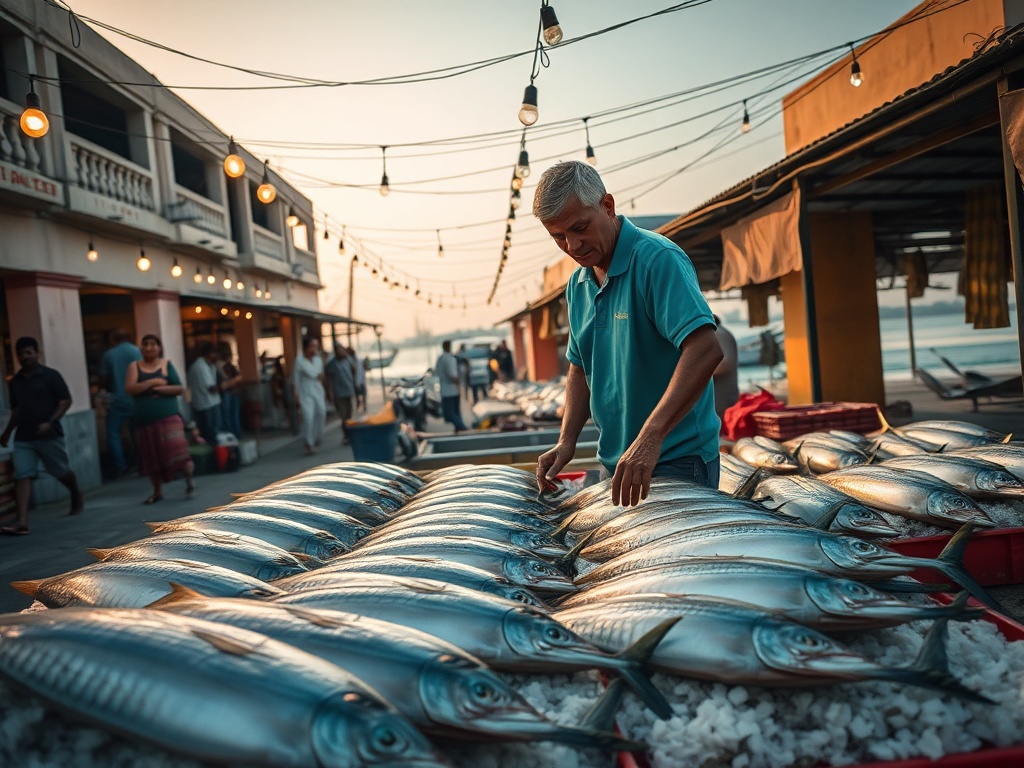
Walk through the fish markets of Hulhumale and Malé, and you'll witness a microcosm of these boundaries at work. The larger Malé market bustles with activity, its scale dwarfing its newer counterpart, yet both offer the same familiar bounty: tuna and skipjack tuna that taste remarkably similar to mackerel from distant shores. Here, the boundaries between local and foreign, traditional and modern, blur in the salty air as fishermen and buyers negotiate not just prices, but the very identity of Maldivian commerce.
The concept of rootedness emerges as another boundary marker. When families speak of being "deeply rooted here for the last 50/60 years," they're not just stating a fact—they're drawing a line in the sand between established community members and newcomers. This distinction carries weight in a nation where housing crises force difficult choices and where the competition for space and opportunity grows more intense with each passing year.
Even in our entertainment choices, boundaries define taste and preference. The question "Will I like this if I didn't like that?" reflects a universal human tendency to categorize and compartmentalize experience. In the Maldives, this extends to how we engage with global culture while maintaining local values, how we adopt technology while preserving tradition.
The most invisible boundaries often prove the most powerful—those etched into circuit boards of the devices that connect these islands to the world, and those written into the algorithms that increasingly shape our daily lives. As artificial intelligence becomes more integrated into Maldivian society, from tourism operations to government services, we're forced to consider where the line between human judgment and machine efficiency should be drawn.
Ultimately, boundaries serve not as barriers but as definitions. They help us understand who we are, what we value, and how we relate to one another. In a nation of scattered islands where the ocean both separates and connects, perhaps we understand better than most that boundaries, when respected, can create the space for true connection to flourish.
— Source fragments: Pets must have boundaries and they should be taught to respect them; Compared to the fish market in Hulhumale, the one in Malé is much larger; The entire family is deeply rooted here for last 50/60 years; Ever Seen These Letters on a Circuit Board?; its AI