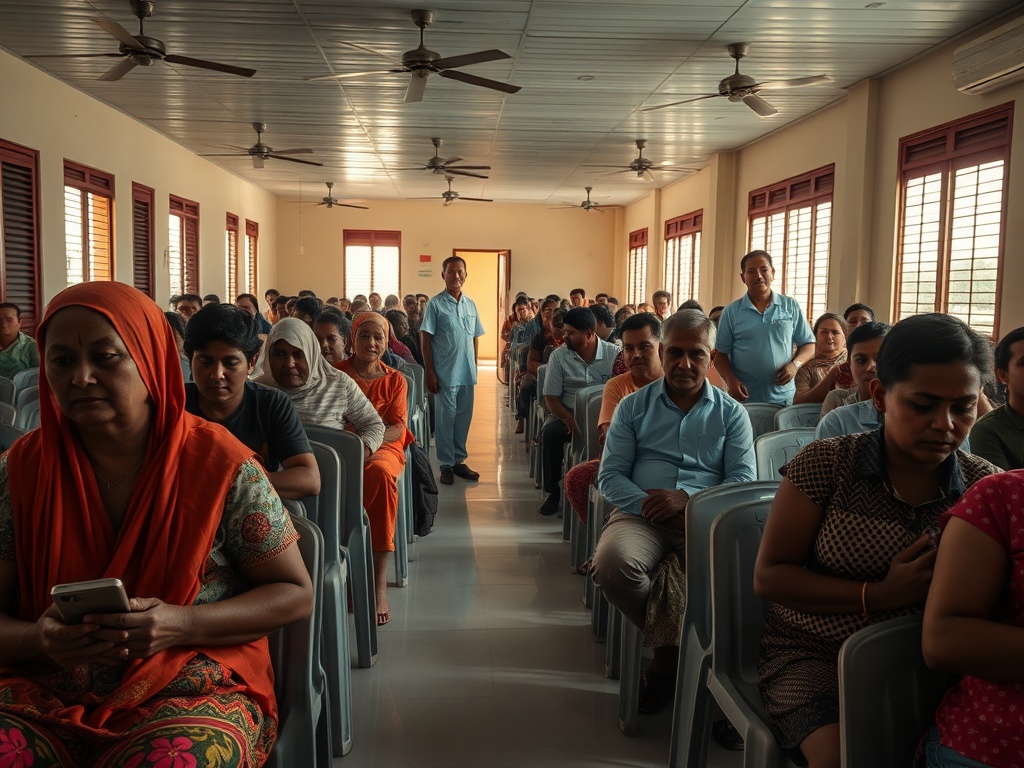
Where Minutes Stretch Into Hours in Malé's Waiting Rooms
In the crowded waiting rooms of Malé's healthcare facilities, time moves differently. Each minute stretches into an eternity of uncertainty, each hour a testament to endurance. The simple phrase "people waiting to start treatment" carries the weight of countless untold stories—of pain managed rather than cured, of lives put on hold, of families watching their loved ones deteriorate while bureaucracy and systemic limitations create an invisible barrier to healing.
Across the Maldives, the healthcare infrastructure strains under the weight of expectation and reality. The national health insurance scheme, designed as a safety net, often becomes entangled in administrative complexities that delay rather than facilitate care. Medicine shortages force difficult choices, while the promise of comprehensive treatment remains just out of reach for many.
The decision to seek medical care abroad represents not just a personal choice but a systemic failure. When local facilities cannot provide timely intervention, families must navigate the additional burdens of travel expenses, accommodation costs, and the emotional toll of receiving care in unfamiliar surroundings. This creates a two-tier system where access to timely treatment becomes dependent on financial means rather than medical need.
Behind every delayed treatment lies a human story—the fisherman who cannot work while awaiting surgery, the mother postponing her own care to prioritize her children's needs, the elderly patient whose condition worsens during the waiting period. These individual struggles collectively paint a picture of a healthcare system at a crossroads, where the gap between medical capability and accessible delivery continues to widen.
The fundamental question remains: how long can a society ask its citizens to wait for the care they need? As the population grows and medical needs become more complex, the urgency for systemic solutions becomes increasingly apparent. The waiting rooms will continue to fill, the hope for timely treatment will persist, and the need for a healthcare system that delivers on its promise of care remains one of the nation's most pressing challenges.
— Source fragments: Idk, but should tell the reason because there are people waiting to start treatment.