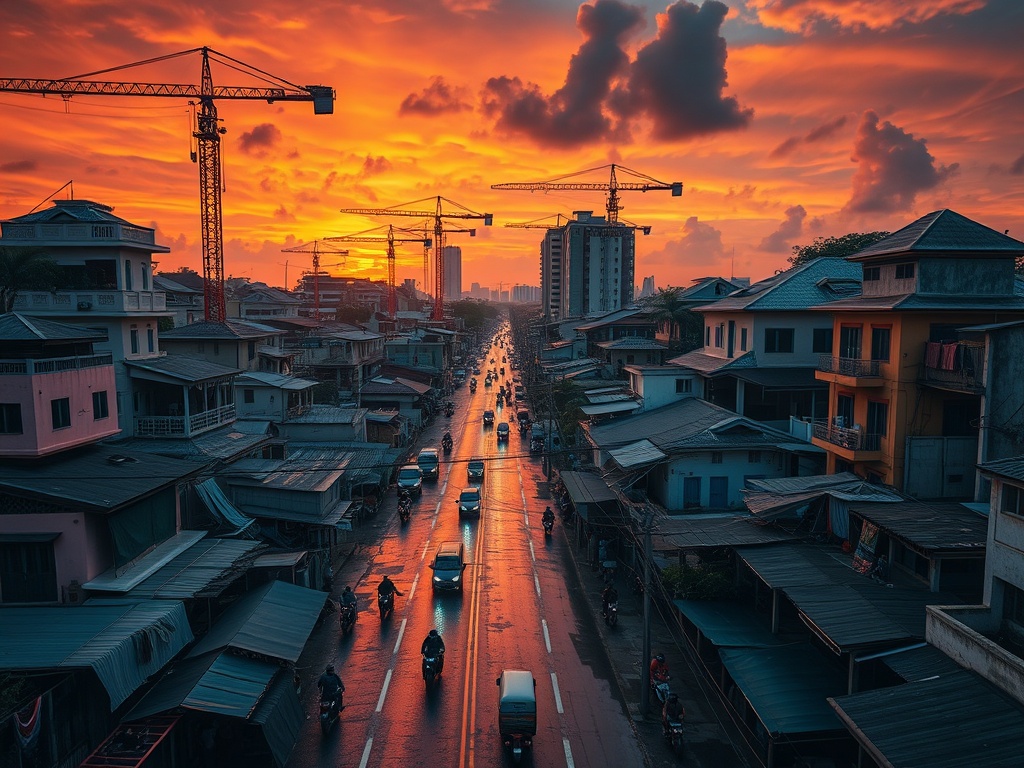
Where Orange Cones on Boduthakurufaanu Magu Redirect a Nation
The scaffolding climbing up buildings and the orange traffic cones redirecting vehicles on Boduthakurufaanu Magu tell only part of the story. Across the Maldives, a quiet transformation is underway—one marked by both ambition and administrative growing pains.
Recent police announcements about road closures for redevelopment work mirror a broader national pattern. In Addu City alone, the government has allocated MVR 1.5 billion for reclaiming 190 hectares of land, with additional millions earmarked for adjacent island development. These projects follow earlier commitments of USD 200 million from international financing for road and harbor infrastructure in the southern atoll.
The scale is staggering, but so are the coordination challenges. Public frustration surfaces when communication gaps emerge, such as confusion about terminal assignments at Velana International Airport. As one aviation observer noted, the responsibility for informing passengers about terminal changes typically falls to airlines, not airport operators—a distinction that becomes crucial during transitions.
Meanwhile, Hulhumalé's streets tell another infrastructure story. Police reports indicate 1,222 vehicles towed over two months, revealing the pressure points of rapid urban development. The tension between growth and livability becomes palpable in these statistics—the need for parking solutions that match the pace of construction.
The development extends beyond urban centers. In Gnaviyani Atoll, work begins on a five-story education center and waste management facility, while new police stations rise across the nation. Each project represents progress, but also raises questions about maintenance capacity and long-term sustainability.
What emerges is a nation building at multiple speeds—reclaiming land in the south while refining urban management in the north, expanding educational infrastructure while addressing basic municipal services. The challenge lies not in the ambition of these projects, but in weaving them into a coherent vision that serves both immediate needs and future generations.
As cranes dot the skyline and reclaimed land expands our geography, the ultimate test may be whether our administrative systems can evolve as rapidly as our infrastructure. The buildings and roads will stand as monuments to this era—the question is what kind of society they will support.
— Source fragments: Road closures for redevelopment work; Addu City land reclamation and funding; Airport terminal responsibility discussions; Hulhumalé vehicle towing statistics; Education center and police station construction