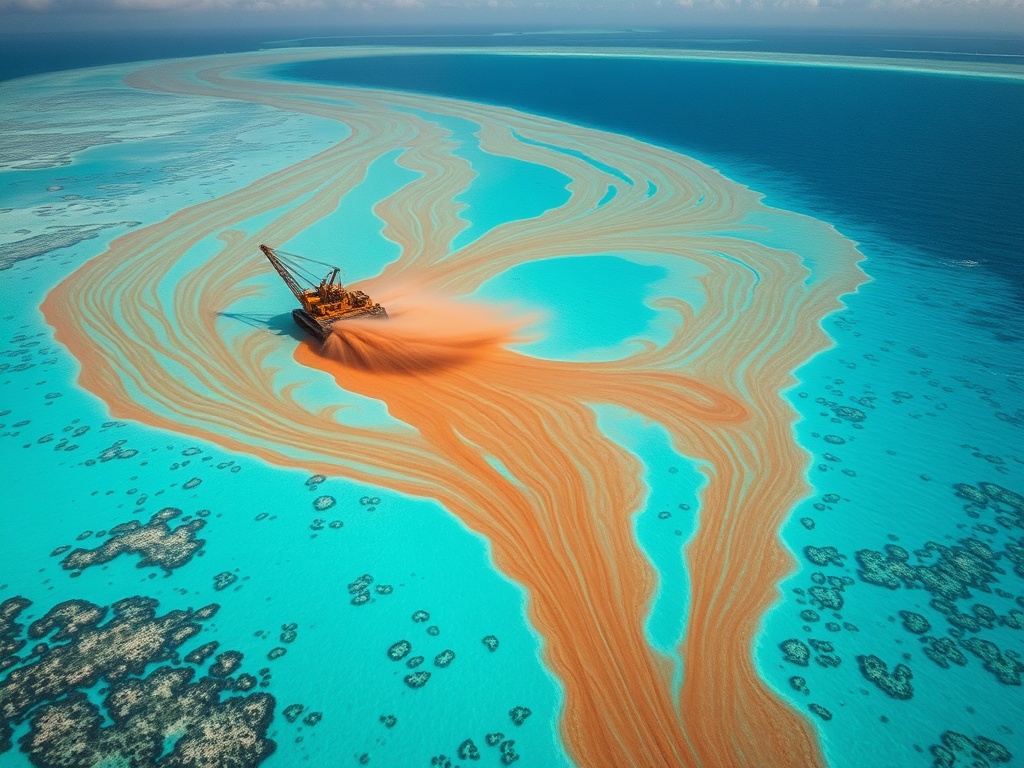
Where Our Freshwater Vanished for New Land
The presidential visit to the island followed a familiar script—promises of development, land reclamation, and progress. But beneath the political rhetoric lies a growing unease among Maldivians who see these projects as environmental gambles with consequences that extend far beyond election cycles.
Across the archipelago, the tension between development and preservation is palpable. The government's push for land reclamation through dredging and sand pumping represents what many see as a fundamental misunderstanding of the Maldives' delicate ecosystem. Coral reefs, the very foundation of these islands, face destruction to make way for artificial land—a trade-off that critics argue sacrifices long-term sustainability for short-term political gain.
This isn't merely theoretical concern. The experience of Hitadhoo serves as a cautionary tale, where four years of continuous dewatering operations depleted freshwater layers, leaving residents dependent on purchased water. The very resource that has sustained island life for centuries was pumped into the sea, creating a dependency where none existed before.
Meanwhile, the political response to environmental concerns often appears reactive rather than strategic. Some observers note that government decisions seem driven more by fear of social media campaigns than by sound environmental policy. The result is what critics describe as immature governance—knee-jerk reactions to public pressure rather than thoughtful, science-based planning.
The destruction extends beyond marine ecosystems. Even terrestrial greenery falls victim to development priorities, with mature trees on islands like Vilingili facing removal not because technology is lacking to preserve them, but because preservation isn't the priority. The very landscape that defines the Maldivian identity—lush vegetation against turquoise waters—is being reshaped by political calculations.
What emerges is a picture of environmental stewardship sacrificed at the altar of political expediency. The natural treasures that have been described as "god-given" face irreversible damage, often because local communities lack the power to stop projects once they commence. The concern isn't just about preserving beauty for tourists, but about maintaining the ecological balance that supports Maldivian life itself.
As one island after another faces similar development pressures, the question remains whether the political system can mature beyond reactive decision-making to embrace truly sustainable development—one that doesn't force communities to choose between basic needs and environmental preservation.
— Source fragments: President goes to some island, promises land reclamation; govt will be planning to dredge this area with sand; Its been 4 years since such an operation commenced in Hitadhoo. Fresh water layer was depleted; People don't realize they are destroying natural god given treasures; our politicians are too immature. too reactive; govt is afraid our environmental people will run a twitter campaign; Governments maintained Vilingili's greenery not because they lacked the technology to cut down large trees