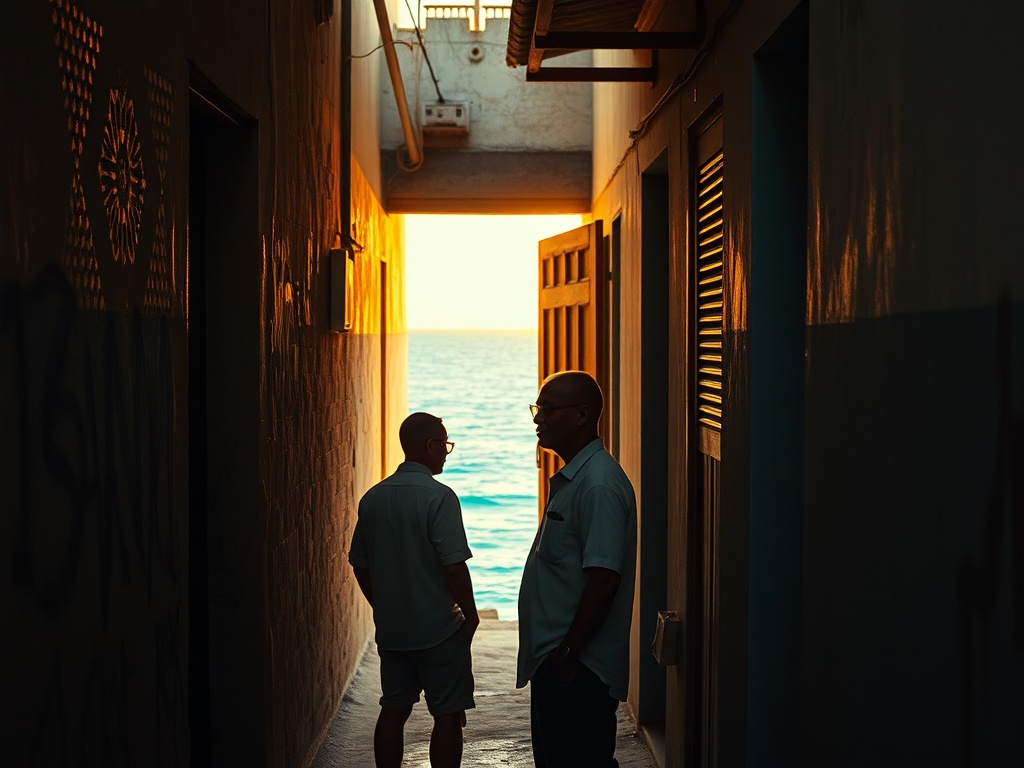
Where Prayer Calls Meet Political Graffiti in Malé
In the crowded lanes of Malé, where the call to prayer mingles with the hum of political debate, a quiet revolution of thought is unfolding. The conversation has moved from tea shops to social media, from whispered concerns to public demands for clarity on where personal freedom ends and communal obligation begins.
"Am I not allowed to say whatever I want?" one voice challenges, echoing the frustration of many who feel the walls closing in on free expression. This isn't merely about political speech but something more fundamental—the right to exist, to choose, to define one's own path within a society that prizes conformity.
The debate around gender identity has become a lightning rod for these broader tensions. "Gender affirming care doesn't affect anyone but the trans person," argues one perspective, framing healthcare as a personal choice rather than a communal concern. This position confronts traditional interpretations that view such matters through the lens of religious prohibition and social preservation.
Yet the conversation reveals nuanced positions that resist easy categorization. Another voice offers: "If the only reason a person isn't committing sin is because of the law then that's not piety." This acknowledges that true faith transcends mere compliance, suggesting that spiritual authenticity requires more than external enforcement.
The political landscape reflects these cultural fault lines. Accusations fly that certain parties "don't respect women's rights," while others question whether "selective justice" operates within the system. The public demands clarity from those who position themselves as advocates of fairness and equity, revealing a deep hunger for consistent moral leadership.
Behind these debates lies the unspoken tension between individual autonomy and collective identity in a 100% Muslim nation. The youth, grappling with unemployment and limited opportunities, find themselves caught between tradition and modernity, between the Maldives they inherit and the one they imagine. The housing crisis, economic pressures, and political disillusionment create a backdrop against which these identity questions feel increasingly urgent.
What emerges is not a simple conflict between progressive and conservative values, but a more complex negotiation of how a society maintains its religious and cultural heritage while making space for the diverse experiences of its people. The conversation touches on fundamental questions: Where does personal freedom responsibly operate within a faith-based community? How does a society balance individual rights with collective values?
As the sun sets over the Indian Ocean, casting long shadows across the crowded capital, these questions remain unresolved but increasingly unavoidable. The struggle is no longer about isolated issues but about the very soul of a nation deciding what kind of society it wants to become—one that embraces complexity or one that demands simplicity, one that makes space for difference or one that insists on uniformity.
The answers, when they come, will shape not just policies but lives, not just laws but identities, in this archipelago at the crossroads of tradition and change.
— Source fragments: MDP does not respect women's rights; Am I not allowed to say whatever I want?; Gender affirming care doesn't affect anyone but the trans person, let us have that choice; If the only reason a person isn't committing sin is bcz of the law then that's not piety; Do you promote selective justice; What is your stand on this?