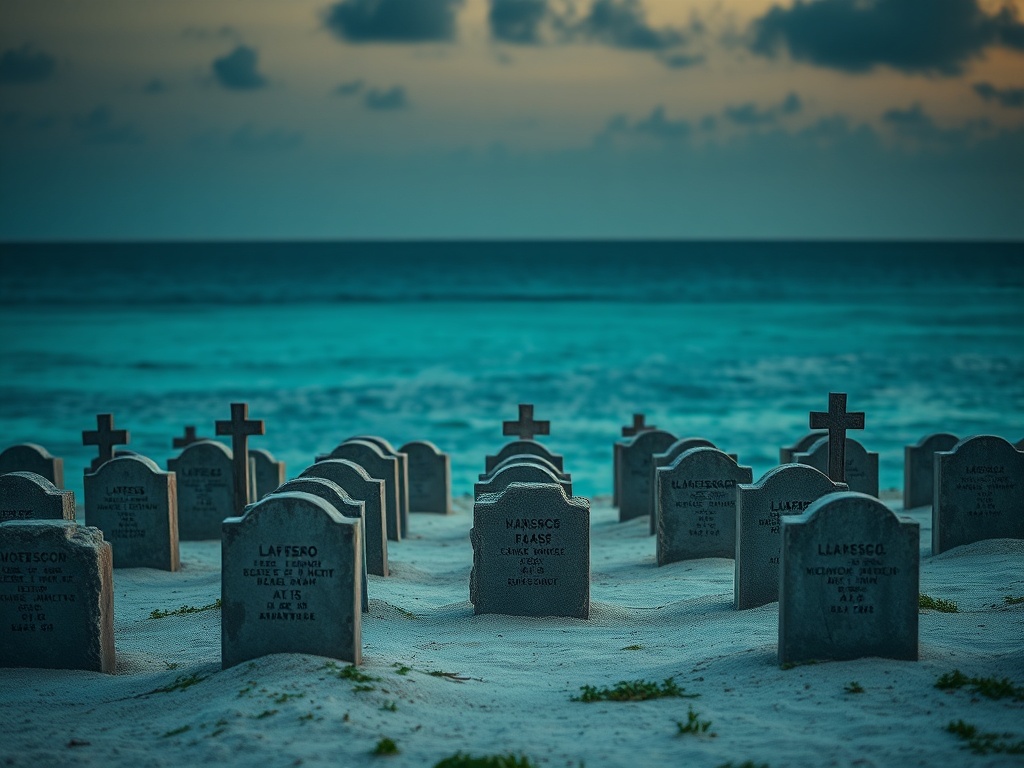
Where Prayer Meets the Ocean at Dusk
In the Maldives, where the call to prayer echoes across islands and the rhythm of life is set by religious observance, a quiet tension persists beneath the surface of unwavering faith. The archipelago's 100% Muslim identity stands as a national pillar, yet the relationship between devotion and daily reality reveals complex layers of belief, tradition, and cultural memory.
The debate often circles around what constitutes proper worship and what strays into forbidden territory. Some voices caution against living among non-Muslim societies, pointing to stories of siblings who traveled abroad—one to Malaysia, the other to the UK—with dramatically different spiritual outcomes. These narratives reflect deeper anxieties about preserving religious identity in an increasingly connected world.
There's a persistent undercurrent suggesting that Maldivians crave tangible connection with the divine—a god they can see, talk to, and touch. This longing hints at cultural remnants that predate Islam's arrival, raising questions about whether centuries of Buddhist influence still shape spiritual expression in subtle ways. The discussion inevitably turns to grave sites and memorial stones, with some arguing these are merely markers of respect for the deceased, while others see dangerous echoes of idolatry's origins.
The economic realities of modern Maldives add another dimension to this spiritual landscape. As the nation grapples with high living costs, foreign currency shortages, and dependence on tourism, financial pressures test religious principles. The system demands money, and people must navigate earning and spending within Islamic boundaries, creating constant tension between material needs and spiritual obligations.
Looking outward, some question how nations like China and Russia achieve success without religious foundations, while predominantly Muslim countries face ongoing challenges. These comparisons, while potentially misleading, reflect a search for understanding about the relationship between faith and progress.
At the individual level, the struggle remains deeply personal. Many describe the internal conflict when confronting what's forbidden—the heart's restlessness when straying from righteous paths, the constant self-rebuke that only subsides with return to proper ways. This spiritual discomfort serves as both compass and conscience in a society where religious identity is paramount.
Ultimately, every Maldivian must make their own journey, balancing the demands of faith with the realities of modern life. The challenge lies in maintaining spiritual purity while engaging with a world that constantly tests convictions, in finding peace within boundaries while navigating systems that often push against them. In these islands where ocean meets sky, the space between earthly existence and divine connection remains both bridge and battleground.
— Source fragments: Religious caution about living abroad, spiritual longing for tangible connection, debate about grave markers and idolatry, economic pressures versus religious principles, comparisons of religious and non-religious societies, internal spiritual conflict