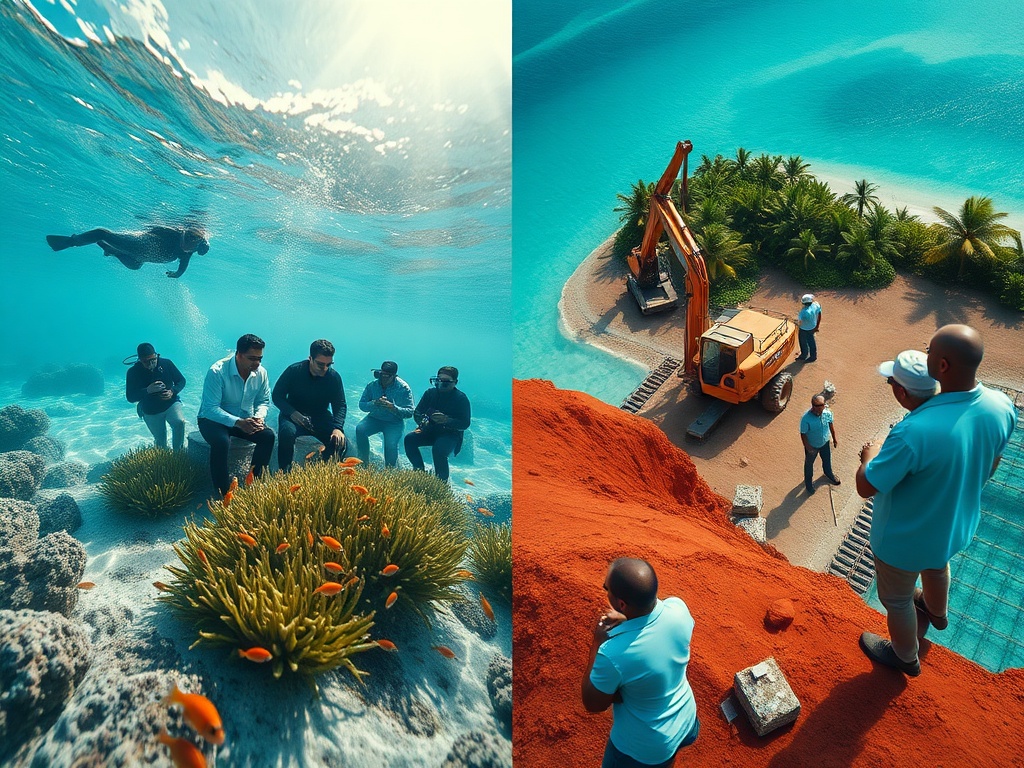
Where Scuba Ministers Met Island Waste Workers
In the archipelago nation of the Maldives, the fight for democratic freedoms and environmental survival have become inextricably linked—two sides of the same coin in a country where political imprisonment and rising sea levels represent existential threats. The journey from prisoner of conscience to climate champion reflects a broader national narrative where personal sacrifice and planetary concern converge.
The symbolic power of the 2009 underwater cabinet meeting—ministers in scuba gear signing documents beneath the waves—captured global attention, transforming the Maldives from a tropical paradise into a climate frontline state. This dramatic gesture wasn't mere political theater; it was a desperate cry from a nation whose highest point sits just 2.4 meters above sea level. The image of a government literally submerged to highlight the threat of rising oceans became an enduring symbol of climate vulnerability.
Today, this environmental consciousness has evolved from symbolic acts to tangible local action. The recent groundbreaking ceremony for the Fuvahmulah City Waste Management Centre represents this maturation—a concrete step toward sustainable waste management in a biosphere reserve recognized for its exceptional biodiversity. Such initiatives demonstrate how climate advocacy has moved beyond international podiums to domestic implementation.
The protection of biodiverse areas through government partnerships reflects a growing understanding that environmental preservation and economic development need not be opposing forces. When scientific surveys confirm an area's ecological significance, conservation becomes not just an environmental imperative but an economic opportunity—a recognition that intact ecosystems have measurable value.
This environmental awakening cuts across political lines, creating rare common ground in a nation often divided by partisan politics. While democratic struggles continue and political prisoners' stories remind us of ongoing challenges, the climate threat has emerged as a unifying concern that transcends traditional political boundaries. The very waters that threaten to submerge the islands also contain the biodiversity that sustains them, creating a powerful incentive for conservation.
As the Maldives navigates complex political waters, its environmental leadership offers a model of how nations can transform vulnerability into advocacy, and symbolic gestures into substantive action. The journey from prison cell to protected biosphere represents more than individual redemption—it symbolizes a nation's growing understanding that true freedom includes the freedom from environmental catastrophe, and that democracy's survival is ultimately tied to the survival of the land—and sea—that sustains it.
— Source fragments: Apart from his protracted struggle for democracy in the #Maldives and incarceration, which earned him 's Prisoner of Conscience status, championed the fight against climate change. His underwater Cabinet meeting in 2009 highlighted the impact of rising; President Dr attends the groundbreaking ceremony of the Fuvahmulah City Waste Management Centre, a key step towards sustainable waste management and environmental protection; Its a biosphere reserve. They did surveys and found this area to be exceptionally bio diverse so they pay the government to keep it protected.