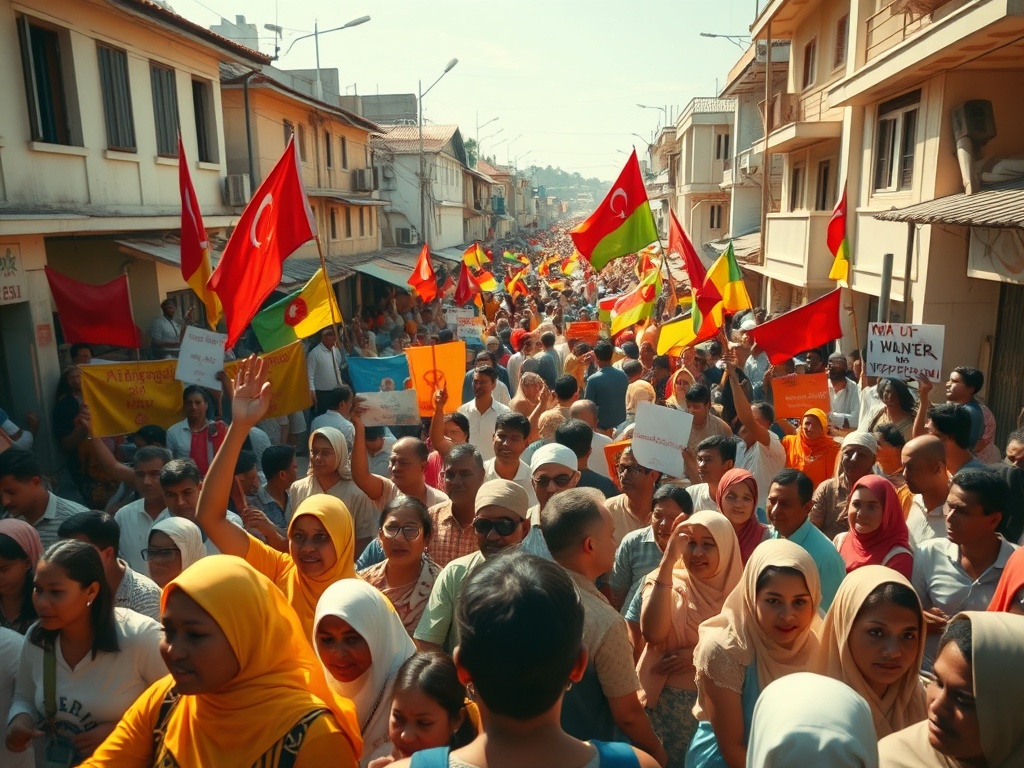
Where the Crowd is the Message in Maldivian Politics
In the political landscape of the Maldives, the spectacle of massive rallies has become a recurring feature that transcends party lines. From PPM to MDP and now PNC, ruling parties have consistently deployed what critics describe as 'shows of strength'—carefully orchestrated events where government employees and state-owned enterprise staff are mobilized to fill the stands. This political theater serves multiple purposes: projecting an image of overwhelming popularity, intimidating opponents, and creating media moments that dominate news cycles.
The economic reality, however, tells a different story. The notion of developing 200 communities to the same standard—a promise frequently made during election campaigns—faces serious questions of sustainability. With limited resources and capacity, this approach strains national finances while delivering uneven results across the archipelago. The gap between political promises and practical governance grows wider with each administration.
Media coverage often focuses on the spectacle rather than substance. The absence of critical reporting on domestic flight operations during major political events, for instance, reflects a pattern where immediate political theater overshadows routine governance matters. This creates an information environment where citizens struggle to distinguish between genuine public sentiment and carefully manufactured displays.
Some observers have noted the emergence of what might be called 'crowd economics'—the suggestion that political parties might essentially rent their supporters, creating a market for political attendance. While this may be hyperbolic, it points to deeper concerns about the authenticity of political engagement and the mechanisms used to demonstrate popular support.
The fundamental question remains: when governance becomes performance, who benefits? The answer appears to be the political class itself, which uses these displays to consolidate power and create an illusion of consensus. Meanwhile, pressing issues—from economic sustainability to service delivery—often take a backseat to political pageantry. This cycle of spectacle governance ultimately undermines public trust and distracts from the substantive work of national development.
— Source fragments: Political rallies as common practice across parties; questions about economic sustainability of development promises; media coverage patterns; critique of orchestrated political displays