Where the Sea is a Highway but the Land Holds You Still
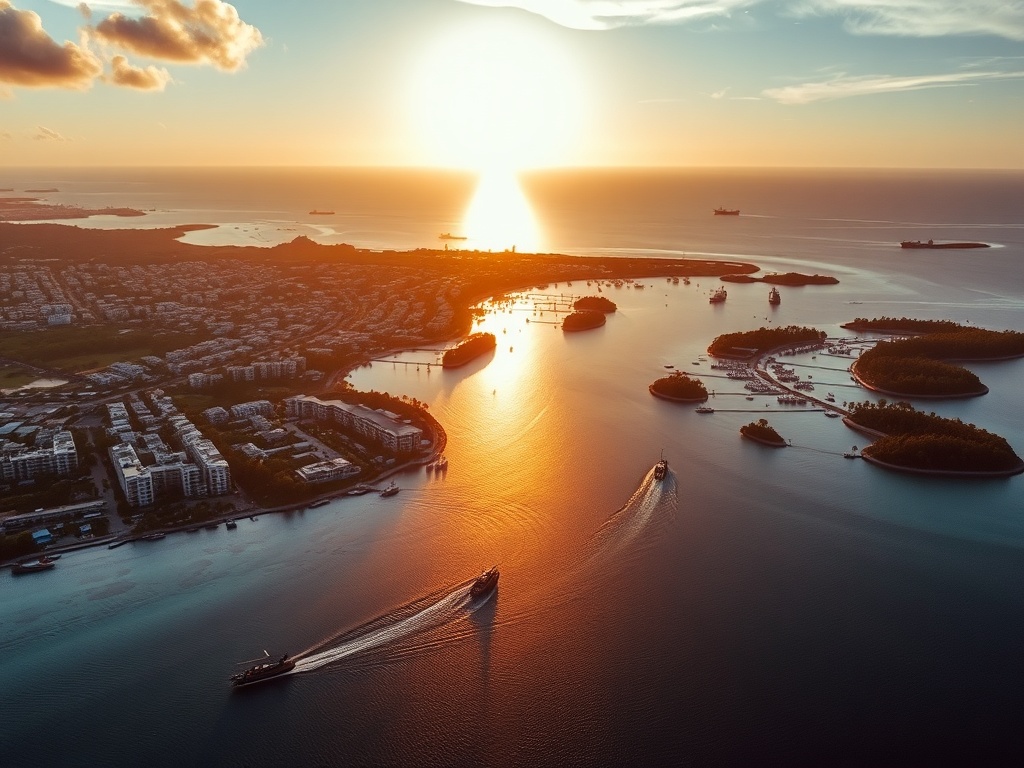
The sea has always been our highway, but the land—the scattered islands that dot our archipelago—remains our anchor. Yet this anchor has become entangled in questions of belonging, value, and purpose that ripple through our daily lives.
'Technically maybe not,' someone begins, 'but if you can't wean out of the land and use it for anything else, then what is it?' The question hangs in the salty air, unanswered. Land that cannot be transformed, cannot be leveraged for growth or change—what value does it truly hold beyond the symbolic? This tension between land as heritage and land as asset plays out across our islands.
There are those who argue for fluidity—that any Dhivehin should be able to settle where they choose, buy land for that purpose, and move freely when life calls them elsewhere. The dream of mobility, of choice unrestricted by artificial boundaries between Malé and the outer atolls. Yet reality presents a stark contrast: a 2000-square-foot plot in Hithadhoo might trade for 300,000 rufiyaa, while a tiny 200-square-foot patch in Malé commands millions. The numbers tell a story of disparity that policy debates cannot ignore.
Meanwhile, another conversation unfolds about the skills that never make it onto certificates. The fisherman who can read the ocean currents like a map, the woman who can weave palm fronds into art, the mechanic who can keep an aging boat engine running against all odds. 'How to capture that in policy?' someone asks, and the question echoes through the corridors where decisions are made. Our education system cannot be the only measure of a person's worth, yet we struggle to value what cannot be quantified.
The proposals come thick and fast—free land for primary residences with restrictions on rental exploitation, taxation systems designed to prevent abuse, the delicate balance between entitlement and responsibility. Some recall past policies that attempted this balancing act, acknowledging that 'our people are not yet ready' for certain approaches.
Underlying it all is the environmental reality—the EIA reports that assess the impact of reclamation and development, the constant negotiation between progress and preservation. The land is not infinite, nor is it indestructible. Each decision we make about it ripples through the ecosystem that sustains us.
In the end, as one voice notes with pragmatic resignation, 'Ultimately the land will end up with the landowner.' But the question remains: who should that be, and on what terms? The debate continues, as complex and layered as the coral foundations of our islands themselves.
— Source fragments: technically maybe not, but if you can't yourself wean out of the land and use it for anything else then what is it?; I think the correct policy is not to differentiate between Male' meeha or Raajetherey meeha; the thing is there are people who will not go through the education system no matter what; I don’t believe in free land handouts; About land: I believe land for living shall be given for free; EIA for the proposed road development and land reclamation; A 2000 sqft land in S. Hithadho on average is worth about 300-500k I believe. A 200sqft land in Male’ is still worth millions; Ultimately the land will end up with the landowner