Where Your Birth Island Decides Your Future
The debate over land distribution in the Maldives has exposed deep fractures in how we conceive of belonging, wealth, and opportunity. At its core lies a fundamental question: should citizenship be tied to the land of one's birth, or should Maldivians have the freedom to move, work, and build lives across the archipelago without sacrificing their right to property?
The current system often feels feudal in practice—inherited plots binding generations to specific islands while creating artificial scarcity. As one observer notes, "We are stuck with land we are born in. This is feudal system. We can do better than this." The sentiment captures the frustration of many who see land not just as physical space but as potential—for economic mobility, for building businesses, for creating homes where opportunity exists.
Consider the hypothetical: a professional from the northern atolls receives a promising job offer in Addu. Under an ideal system, they could buy property, settle for their employment tenure, then sell and return north if desired. This fluidity remains largely theoretical in today's Maldives, where land ownership often follows bloodlines rather than need or contribution.
The Binveriya scheme has become a lightning rod in this discussion, described by some as "THE biggest issue of our generation." Critics argue it perpetuates inequality by granting land in the Greater Malé region based primarily on Malé ancestry, creating what amounts to a birthright system unavailable to other Maldivians. Meanwhile, those outside the capital must typically wait until marriage or established residency to qualify for land in their islands.
This isn't merely about fairness—it's about practical economics. As one voice from Baa Atoll illustrates, even those with inherited land elsewhere may feel compelled to seek property in the capital region for economic security. The result: multiple land holdings concentrated in few hands while many Maldivians struggle to secure any foothold.
The solution lies not in eliminating land ownership but in reforming its distribution. Policy mechanisms could discourage land hoarding—perhaps through holding costs that incentivize utilization rather than speculation. As one comment notes, "If holding on to land costs money then they will release it." This approach could unlock vacant lands from large-scale holders while addressing the legitimate concern that "there is enough land for everyone" if properly managed.
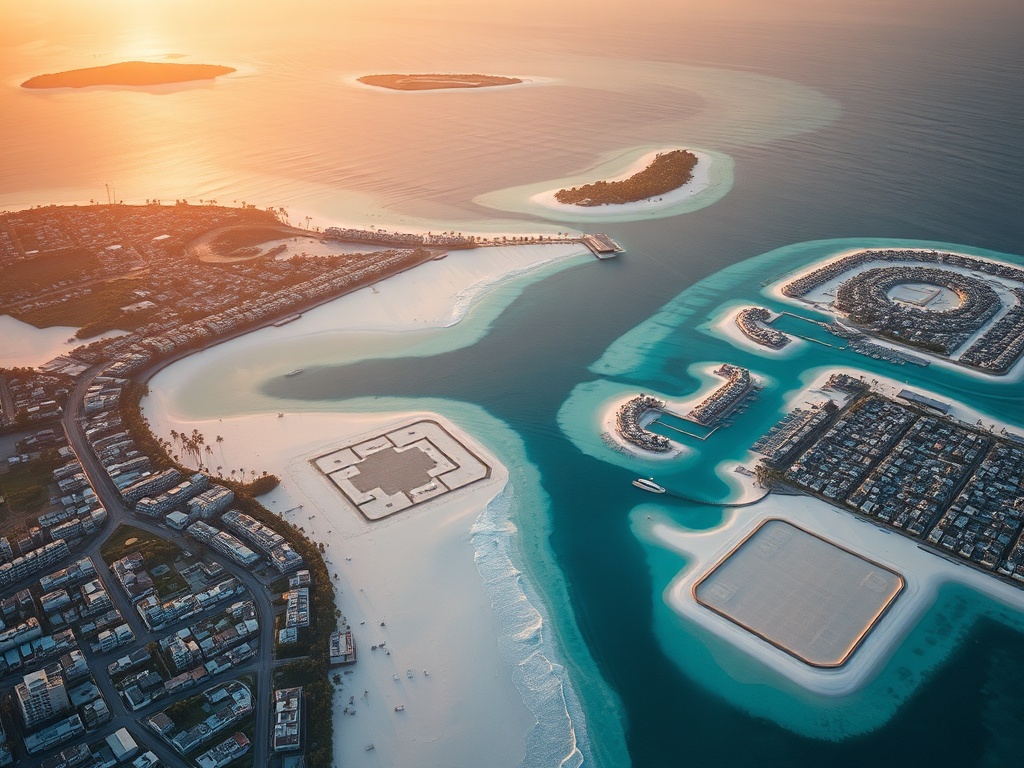
Previous reclamation projects in Dhidhoo, KF, Hinnavaru, Naifaru, and Addu have created lands that remain largely vacant—a testament to failed distribution policies rather than actual scarcity. The challenge isn't creating more land but ensuring existing land serves public need rather than private accumulation.
Moving forward requires acknowledging that what's given cannot easily be taken back, but future policies can be designed more equitably. This means moving beyond partisan divides to address land as the fundamental resource that shapes Maldivian lives—not as electoral currency but as the foundation of national prosperity and individual dignity.
— Source fragments: currently we are stuck with land we are born in. this is feudal system; Binveriya scheme is THE biggest issue of our generation; If holding on to land costs money then they will release it; there is enough land for everyone; Why opt for large-scale land reclamation... Most of those lands remain vacant