Whispers of the Sea Carry Our Forgotten Truths
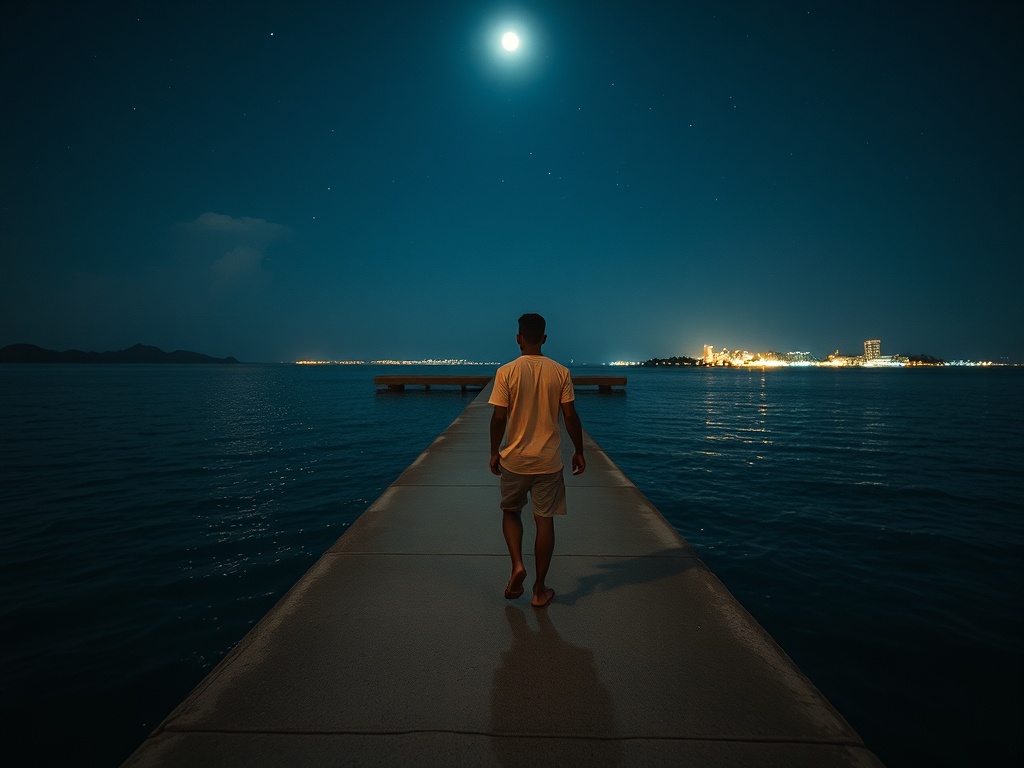
The moon cast a silver path across the water as I walked from Hulhumalé to Malé in the deep hours. Two AM, the time when spirits are said to walk the beaches, though the only spirits I felt were the ghosts of stories left untold. The concrete causeway stretched before me, a modern bridge between what is remembered and what was erased.
My phone buzzed—Abdul messaging again. 'You'll be the first to read my work when I'm done,' I'd promised him. But what work? What story could I possibly tell when the history of my own islands felt like a borrowed garment, stitched together by foreign hands?
I remembered my grandmother's stories, the ones she whispered when the government officials weren't listening. She spoke of the Giraavaru people, but not as the 'original Dhivehi people' the foreign writers claimed. She described them as just one thread in the rich tapestry of our archipelago, their story elevated while others were silenced. 'The history we were taught,' she'd say, 'is a monologue of the North masquerading as memory.'
The warm night air carried the salt scent of the Indian Ocean, and I thought of all the development money pouring into certain islands while others remained forgotten. The balance of corruption—not just financial, but historical. The selective preservation that edited out the South, that treated certain stories as noise rather than national heritage.
Halfway across, I paused where the water lapped against the causeway's edges. This was where spirits gathered, according to local lore. But tonight, I felt no fear—only the weight of unwritten stories. The spirits weren't threatening; they were waiting to be heard.
I thought about the insecurity my friends felt, giving their lives to jobs that offered no security. The parallel was striking—how we could pour so much into systems that ultimately didn't value our contributions, just as we'd invested in a national narrative that didn't include all our voices.
As I reached Malé's shore, the first hints of dawn touched the eastern horizon. The city slept, unaware of the young writer walking its streets, collecting fragments of truth like seashells after high tide. I pulled out my phone and typed a message to Abdul: 'I'm starting to understand what needs to be written. It's not about creating new stories, but listening to the old ones that were never recorded.'
The security guard at the harbor smiled as I passed. 'Late night?' he asked. 'Or early morning?'
'Both,' I replied. 'I've been traveling between times.'
In that moment, I realized my spiritual guide wasn't a person or a text, but this archipelago itself—the sea that connected our islands, the stories that swam between them like fish, waiting to be caught by someone willing to listen. The real betrayal wasn't in being a traitor to false allies, but in abandoning the truth that lived in our waters, our beaches, our grandmothers' whispers.
By the time I turned back toward Hulhumalé, the sun was rising, painting the lagoon in shades of gold and rose. Nothing had stopped me on my journey except the spirits by the beach—and they had only asked to be remembered.
— Source fragments: The history of the Maldives, as it's been written is a monologue of the North masquerading as national memory. The tales of the South was left unrecorded | exactly. for some reason they have made us believe Giraavaru people are the 'original' dhivehi people | Its possible. I did it once. Hulhumale' to male' and back. Around 2am and 4am, nothing stops you except the spirits by the beach | Thats my spiritual guide irl | abdul you'll be the first to read my work when i'm done