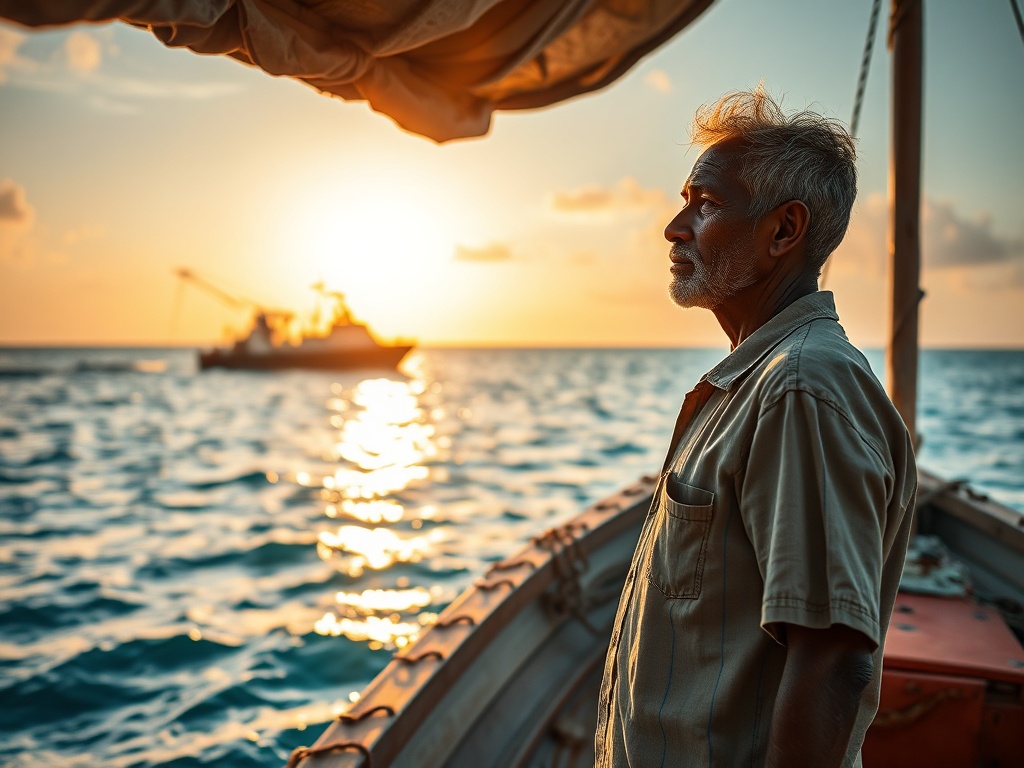
Whispers of the Sea, Echoes of Our Home
The sea was unusually still that morning, the kind of calm that makes a fisherman nervous. Ahmed stood on the prow of his dhoni, the familiar scent of salt and diesel filling his lungs. In the distance, he saw them again—the foreign vessels, their silhouettes stark against the rising sun. They moved with an industrial precision that felt alien in these waters that had cradled his family for generations.
He remembered his grandfather's stories of fishing these same seas, of the respect they showed every creature they caught. Now, he'd seen what these foreign ships did—the brutal efficiency of cutting fins and discarding the rest. The sharks, once revered as guardians of the deep, became mere commodities in waters that foreign nations refused to recognize as Maldivian.
Back on the island, the political chatter buzzed like flies around drying fish. Men gathered at the local coffee shop, their voices rising and falling with the latest rumors about land allocations and foreign bases. Ahmed listened but rarely spoke. He'd been arrested once during the MDP regime, though he'd done nothing wrong—just been in the wrong place when political tensions boiled over. Now he stayed clear of affiliations, a man trying to remain untangled in a nation where everyone seemed connected by invisible strings.
The housing crisis touched everyone he knew. His cousin in Malé lived with three other families in a space meant for one, while wealthy islanders inherited multi-story homes and talked of generational wealth. Ahmed had seen how land became currency during elections, how promises were made and broken with the changing tides of power.
At night, sitting on the beach with his feet in the warm water, he'd watch the lights of foreign military vessels on the horizon. The government said they were there for protection, but to Ahmed, they felt like another kind of invasion—one that didn't involve cutting shark fins but cutting away at something deeper, something essential to what it meant to be Maldivian.
He thought of his son, who dreamed of being a pilot, and wondered what future these waters would hold for him. Would he too become a fisherman watching foreign ships plunder their heritage? Or would he join the exodus to Malé, competing for space in an increasingly crowded capital?
The moon rose over the lagoon, painting a silver path across the water. Ahmed stood and brushed the sand from his sarong. Tomorrow he would fish again, navigating not just the physical currents but the unseen ones—of politics, of foreign influence, of a nation struggling to define itself in waters that were both its greatest blessing and its most vulnerable border.
— Source fragments: Foreign vessels doing industrial shark finning, fishermen's knowledge of this practice, personal freedom from government affiliations, political arrests, housing and land allocation issues, generational wealth disparities, the feeling of precarious national situation