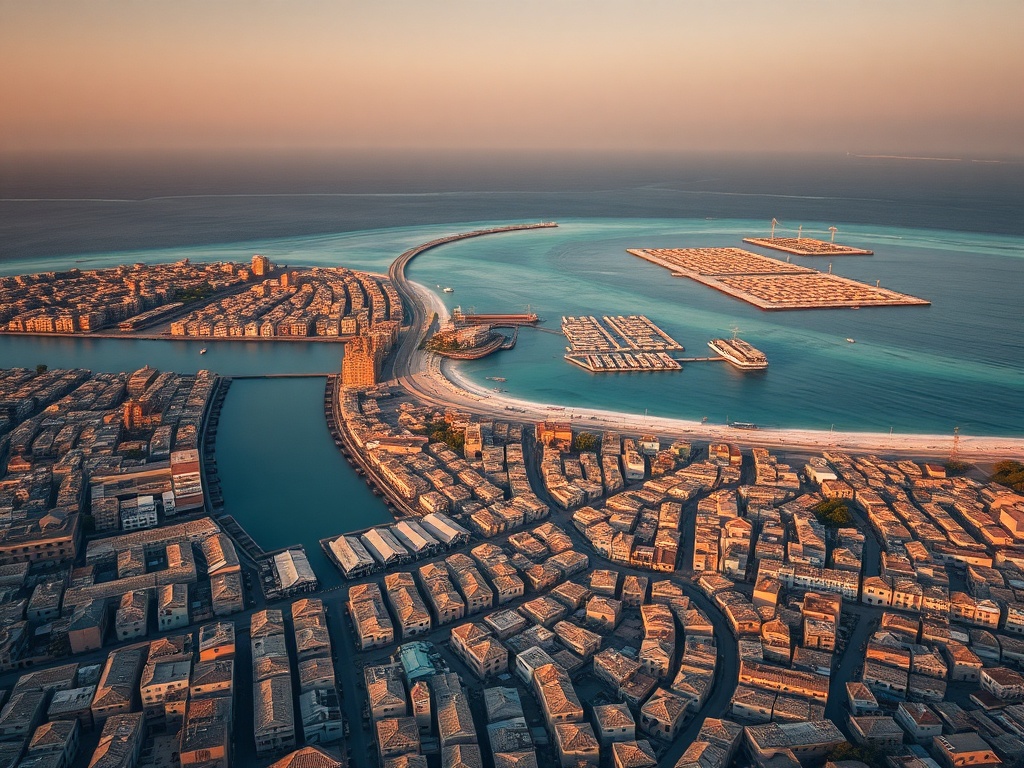
Who Gets the New Land in Malé's Golden Hour?
In the crowded archipelago nation where land represents both scarcity and sovereignty, the distribution of urban territory in the capital city has emerged as one of the most contentious public conversations. The debate touches on fundamental questions of citizenship, belonging, and the very definition of community in a nation where geographic constraints constantly challenge conventional notions of ownership.
The assertion that Male citizens deserve free land allocations from their own city reflects a growing sentiment among urban populations who see themselves as the rightful custodians of the capital's limited territory. This perspective positions land not merely as property but as heritage—an inheritance tied to generations of urban residence and contribution to the city's development. For many, this represents a corrective to decades of migration patterns that have strained the capital's infrastructure while diluting the sense of belonging among long-term residents.
The Binveriya Scheme, frequently positioned as a win-win solution, attempts to navigate these complex waters by offering land distribution mechanisms that acknowledge both historical claims and contemporary realities. Proponents argue that such programs recognize the unique challenges faced by residents of the capital, where overcrowding has reached critical levels and affordable housing remains elusive for many families. The scheme represents an attempt to balance urban development with social equity, though its implementation continues to draw both support and scrutiny.
What makes this conversation particularly compelling is how it mirrors broader discussions happening across the Maldives about resource distribution, urban planning, and the rights of citizens in a rapidly developing nation. The tension between individual entitlement and collective benefit plays out against the backdrop of Male's unique geography—a small island capital where every square meter carries disproportionate significance.
As the debate evolves, it raises fundamental questions about how modern nations balance tradition with progress, individual rights with community needs, and historical claims with contemporary realities. The conversation around land allocation in Male ultimately becomes a conversation about what kind of society the Maldives wants to build—one where urban space serves as a foundation for inclusive growth or becomes another marker of social division.
The emotional resonance of these discussions underscores how land represents more than physical territory in the Maldivian context. It symbolizes security, identity, and connection to place in a nation where the relationship between people and land has always been complicated by geography. How these competing claims are reconciled will shape not just the skyline of Male but the social fabric of the nation for generations to come.
— Source fragments: Theres nothing wrong in getting free land for male citizens from there own city !!! They are the rightfull owners !! Anyway Binveriya Scheme is a WIN WIN for us RT people as well !!!