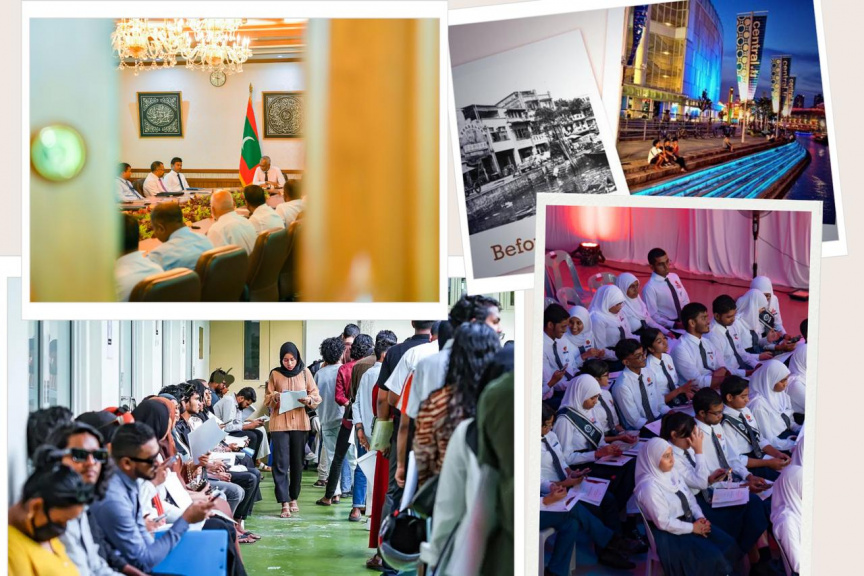
Why Maldivian Leaders Repeat Mistakes Hindering Development
In his writings on leadership, Sir Alex Ferguson, one of the most successful football managers in history, emphasized that effective leaders should focus on vision and strategy rather than micromanaging routine tasks. This principle, while rooted in sports, applies equally to national leadership. Countries led by visionary individuals have thrived, while those distracted by minor issues have lagged behind. Singapore, for instance, achieved independence around the same time as the Maldives but under far more challenging circumstances. Under Prime Minister Lee Kuan Yew, Singapore prioritized strong institutional systems, education, and anti-corruption measures, transforming into a global hub for finance and trade. In contrast, the Maldives, despite its wealth from tourism and political stability, has struggled to achieve sustainable progress. Sixty years after independence, significant portions of the population still lack adequate housing, quality education, and dependable healthcare. Leaders often focus on trivial matters like school uniforms and dress codes rather than addressing structural reforms in education, civil service, and economic diversification. Corruption remains rampant, and accountability mechanisms are weak. The lack of long-term vision and strategic planning has left the Maldives repeating past mistakes, hindering its development. Experts highlight that Maldivian leaders often prioritize short-term political gains over long-term national strategies, a trend that continues to block meaningful progress.