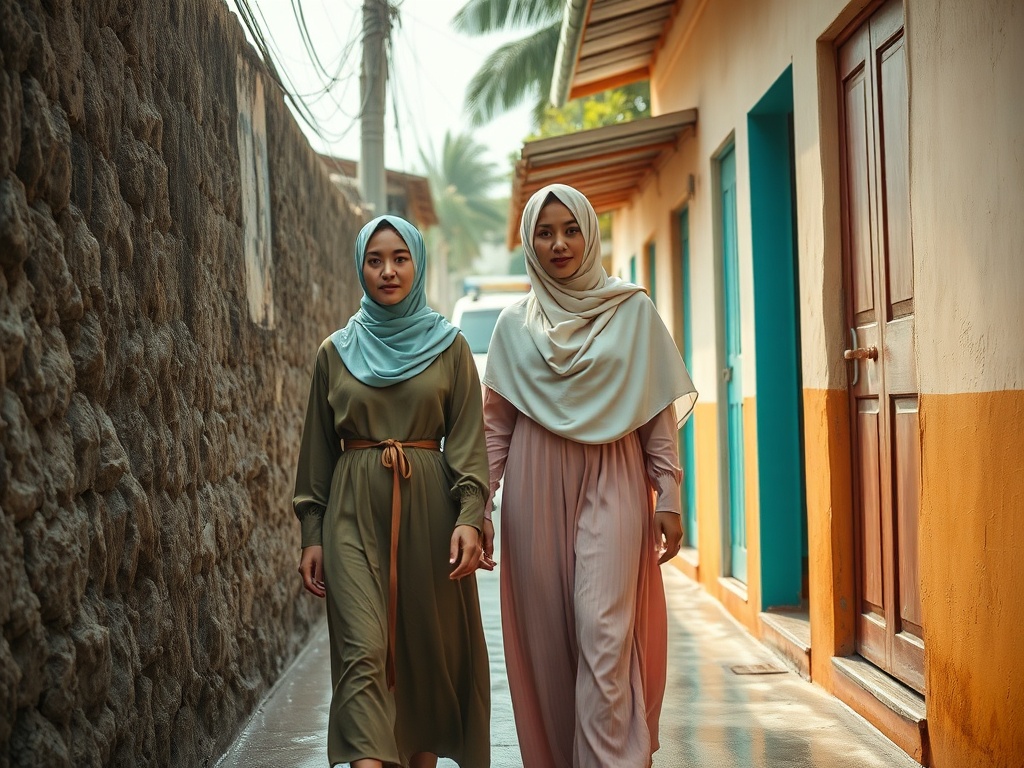
Why the Burden of Modesty Falls on Women in Malé's Cafes
In the cafes of Malé and across the digital squares of Maldivian social media, a persistent question echoes through the humid air: why does the burden of religious modesty fall disproportionately on women? This is not merely an academic debate but a lived reality that touches the core of how a rapidly modernizing society navigates its Islamic identity.
The conversation often begins with dress codes. Critics point to what they see as inconsistent application of religious principles, questioning why specific garments like the hijab are emphasized for women while comparable standards aren't uniformly applied to men. This perceived double standard fuels frustration among those who believe modesty should be a balanced obligation or, alternatively, a matter of personal conviction rather than social enforcement.
At the heart of this discussion lies a fundamental tension between obligation and choice. Some argue that true religious practice cannot be reduced to outward appearances alone, emphasizing that core ethical principles like refraining from harm and theft represent more substantial obligations. The concern, as voiced in these debates, is that focusing excessively on specific garments risks fetishizing the symbol over the substance of faith.
This discourse extends even to the youngest members of society, where anxieties surface about the spiritual implications of childhood innocence. The worry that children might face divine judgment for ordinary behavior reveals deeper societal anxieties about salvation and purity in a changing world.
What makes these conversations particularly poignant in the Maldivian context is how they reflect broader tensions within a society grappling with modernization while maintaining its Islamic identity. As the nation confronts economic challenges, political polarization, and social transformation, questions of personal freedom versus collective norms become increasingly charged.
The debate transcends simple binaries of religious versus secular. Many participants seek not to reject Islamic values but to redefine their application in contemporary life. They question whether enforcement through social pressure truly serves spiritual goals or merely reinforces power dynamics. The conversation suggests a desire for a more nuanced understanding of faith—one that accommodates personal agency while respecting cultural traditions.
As Maldives continues to evolve, these discussions about modesty, choice, and religious interpretation reflect a society in dialogue with itself, seeking balance between tradition and progress, community standards and individual conscience. The outcome of this ongoing conversation will likely shape the social fabric of the islands for generations to come.
— Source fragments: Why is the onus on women all the time? If hijab is an obligation all men in Maldives should wear jubbaa and mun'du; Hijab is not an obligation it's a choice. Not murdering people and not robbing people are obligations; You can modestly dress without hijab; Please see the kids, they are showing legs. Omg. will those innocent children goto hell?