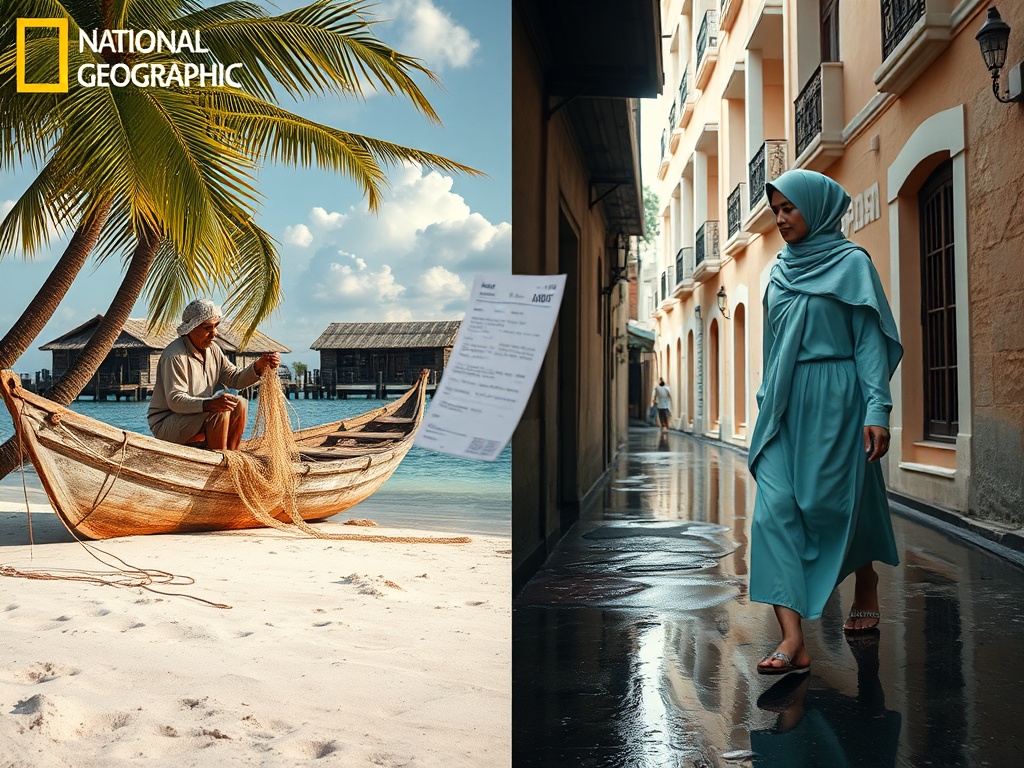
Why You Vote for an Island You've Never Seen
In the wake of another election cycle, a fundamental question echoes across Maldivian social circles and coffee shops: why must we vote based on ancestral islands we may never have inhabited? The permanent address system, a colonial administrative relic, has become the unlikely focal point of political discontent.
Critics argue the current system creates artificial constituencies that bear little relation to where people actually reside. With nearly half the population now living in the Greater Malé region, the electoral map increasingly diverges from demographic reality. The result is a political landscape where representation fails to match population distribution, creating what many see as structural inequities in political power.
This isn't merely an academic debate. The system directly impacts political strategy, with parties campaigning differently in "home islands" versus actual residences. Some analysts suggest this contributes to the disconnect between political messaging and voter concerns, as parties must navigate both geographical and psychological constituencies.
The movement to abolish permanent addresses taps into deeper frustrations about political modernization. Many citizens see the system as enabling political manipulation, where votes become tied to ancestral loyalties rather than current needs and policy positions. This sentiment is particularly strong among younger, mobile Maldivians who've never lived on their "permanent" island.
Opponents of reform raise practical concerns about tracking mobile populations and maintaining community representation. They argue that the current system preserves important cultural and regional ties that might otherwise be lost in a purely residence-based approach. However, even these defenders acknowledge the system needs modernization.
What emerges from this debate is a broader conversation about political representation in a rapidly changing nation. The discussion reflects growing impatience with political institutions that seem slow to adapt to demographic realities. As one social media commentator noted, the damage from outdated systems may already be done, but the demand for change continues to build.
The solution likely lies not in simply copying systems from larger countries, but in developing uniquely Maldivian approaches that balance community preservation with individual representation. Some suggest reducing parliamentary seats while reforming constituency boundaries, others propose hybrid systems that acknowledge both residence and heritage.
What's clear is that the permanent address debate has become symbolic of larger questions about political evolution in the Maldives. It represents the tension between tradition and modernization, between ancestral loyalty and contemporary reality. As the nation moves forward, finding answers to these questions may determine not just electoral outcomes, but the very nature of Maldivian democracy.
— Source fragments: Where you live is the only address the govt needs to consider for anything, period. We must end this permanent address bullshit; Hmmm. That will give Greater Malè 40 seats in the Majlis. Really empower the rest of the islands; Dhaaimee address brings no benefit to the people. Citizens should be able to freely move in our own country and still vote based on where we live; Leave the land aside, for a minute Why should I vote for a council in an island I have never ever lived in my whole life? Sense make?