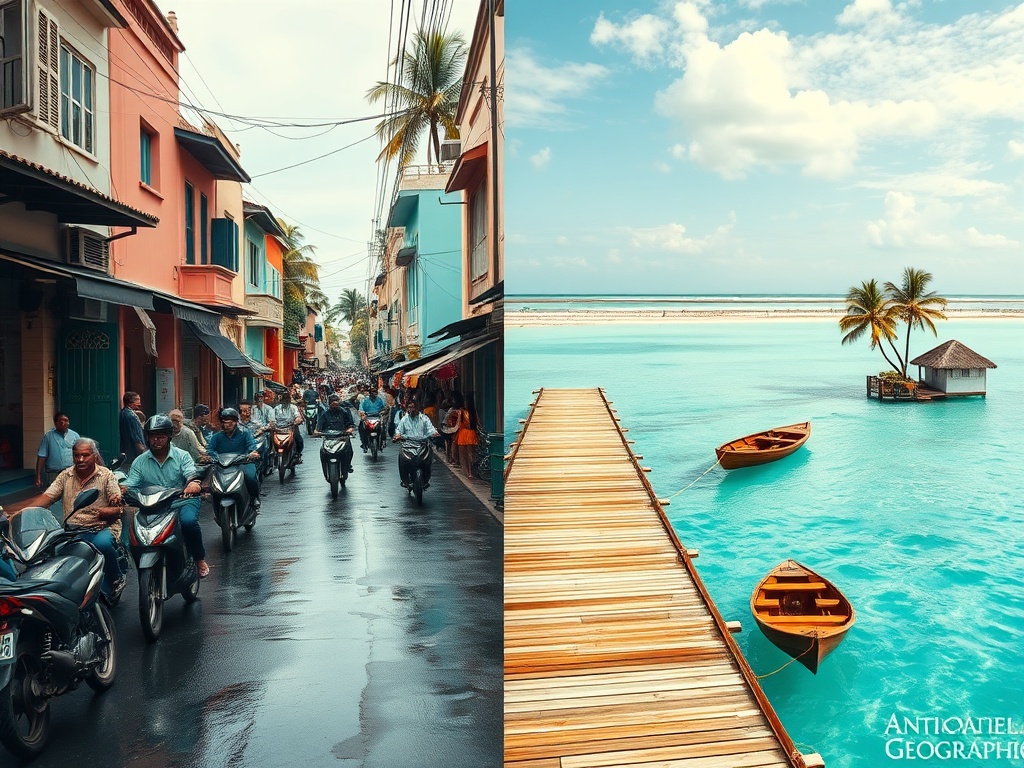
Will Malé Swallow the Outer Islands' Political Voice?
The political conversation in Maldives has turned to constitutional mechanics and their implications for democratic representation. At the heart of the debate lies a fundamental question about political geography: how to balance power between the congested capital and the scattered archipelago that defines the nation.
Currently, the system maintains a delicate balance through permanent address requirements that preserve some political influence for the islands, even as critics argue that many non-elite Members of Parliament serve as puppets for Male'-based elites. This arrangement, while imperfect, maintains at least the framework of nationwide representation.
The proposed constitutional changes would eliminate these address requirements, potentially shifting political power decisively toward the capital. Supporters argue this would create a more direct democratic system where representatives are chosen based on merit and platform rather than geographic quotas. They contend the current system artificially preserves outdated regional divisions in an increasingly mobile society.
However, critics worry this reform would institutionalize existing power imbalances. Without constitutional protections for outer island representation, political influence could concentrate entirely in Malé, where media, money, and political infrastructure already dominate. The concern isn't merely theoretical—it touches on the very distribution of resources, development priorities, and political attention across the atolls.
The implications extend beyond parliamentary composition to the future of recently developed urban centers and remote islands. Regional cities and outer atolls risk becoming political afterthoughts in a system dominated by capital-centric politics. The debate reflects deeper tensions between efficiency and equity, between creating a streamlined government and ensuring all Maldivians have a voice in their nation's direction.
As constitutional discussions advance, the fundamental question remains: can democracy thrive when political power becomes geographically concentrated, or does genuine representation require mechanisms that ensure diverse voices from across the archipelago? The answer will shape Maldives' political landscape for generations.
— Source fragments: What's coming next is the referendum to change the constitution and enable an extended term; Wouldn't ending permanent address shift political power entirely to Male'? Right now, the system artificially preserves some power for the islands; Wouldn't removing it make that imbalance official?; I just worry about what'll happen to the RT cities and islands if the Majlis composition changes