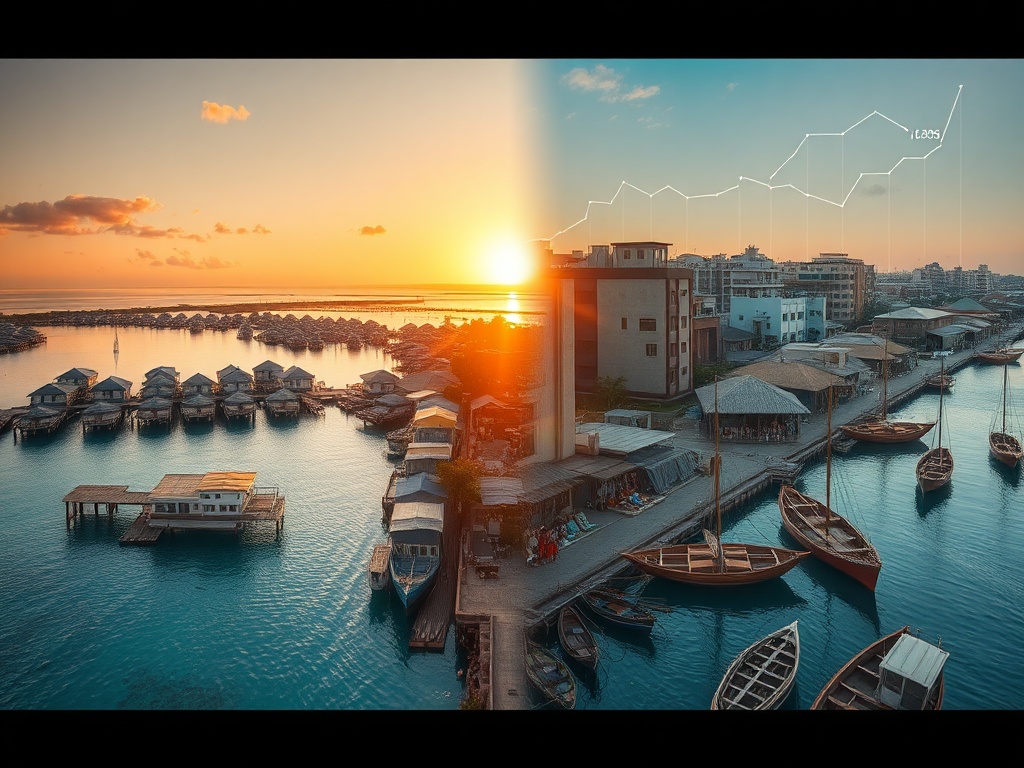
World Bank's 3.9% Growth Forecast: Maldives' Lowest in Memory
The World Bank's recent forecast of 3.9% GDP growth for 2026 stands as a stark departure from the robust expansion Maldives has known under previous administrations. This projection, described by observers as "unheard of" in the nation's recent economic history, raises fundamental questions about the current trajectory of South Asia's smallest economy.
At the heart of the concern lies what many describe as an increasingly evident pattern: policies that appear to run counter to the incentives of the very tourism industry that generates approximately 80% of national revenue. From what critics term an "awful" national airport situation persisting for years to the banking system's forced USD forex policy that continues to degrade the Maldivian Rufiyaa, the structural challenges are mounting.
The debate extends beyond tourism to touch on deeper questions of economic diversity and historical development paths. While some celebrate tourism pioneers from Male' for transforming the economy, others point to what they see as the industry's role in the destruction of the shipping sector—a sector that, had it been nurtured, some argue could have dwarfed tourism's economic contribution.
Current economic pressures are exposing long-standing tensions about wealth distribution and opportunity. The discussion around land distribution highlights these concerns vividly: only the wealthiest families appear positioned to develop land without relying on loans, while the banking system's capital limitations prevent broader access to financing. The result, critics suggest, is yet another mechanism that concentrates assets among "a privileged few."
Meanwhile, the country faces what observers describe as near-bankruptcy conditions, with billions in loans due externally and internally. The government's capacity to address pressing needs—from housing for over 50,000 people to an overloaded healthcare system—appears increasingly constrained. These domestic challenges unfold against a backdrop of regional economic realities, where the Maldives' service sector orientation has historically set it apart from agricultural-dependent neighbors.
The fundamental tension appears between celebrating tourism's transformative role while acknowledging its limitations and unintended consequences. After 53 years of tourism-driven development, the call for economic revolution grows louder even as the tools to achieve it seem increasingly out of reach. The question that hangs over the economic conversation is whether the current model can evolve to meet both immediate needs and long-term aspirations, or if deeper structural changes are required to build a more resilient and inclusive economic foundation.
— Source fragments: World Bank forecasts 3.9% GDP growth for 2026; do the resorts really have leverage though? why has so many govt policies and moves been against their incentives?; national banking system tgst forced usd forex policy; pioneers of tourism industry are hathar kashi mathi male', and that industry generates 80% of national revenue; they also played a pivotal role in destroying the shipping industry; Only the wealthiest families will be in a position to develop the land; giving everything to the wealthy elite again; The Maldivian economy was transformed by the private sector by introducing tourism; we have been begging governments to revolutionize our economy