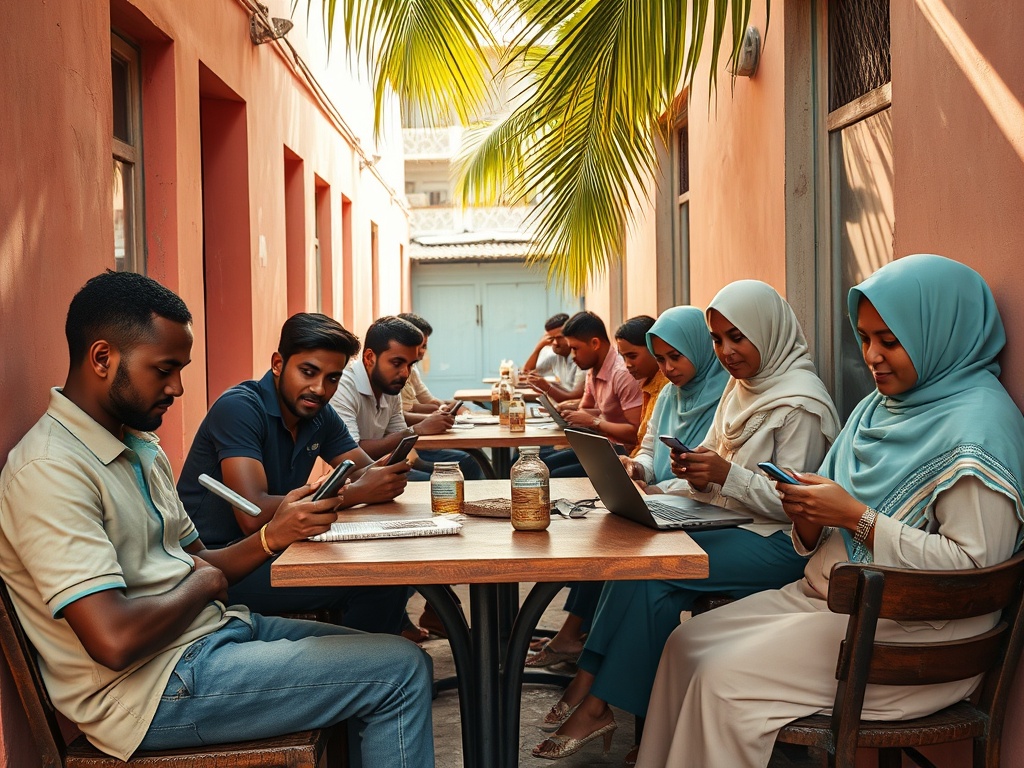
Young Maldivians in Cafés, Redefining Politics on Their Phones
Across the atolls of the Maldives, a quiet revolution is unfolding—not in the streets, but in the minds of a generation coming of age. Young Maldivians are finding their political voice, armed with digital platforms and a determination to reshape their nation's future. This emerging consciousness represents a fundamental shift from traditional political allegiances toward issue-based engagement.
The historical context cannot be ignored. Many recall the era when basic staples were scarce and malnutrition was widespread—a period before economic development brought relative prosperity. The leadership that navigated those challenging times remains etched in national memory, with supporters pointing to infrastructure development and economic stabilization as enduring legacies. Yet the very success of that development has created new expectations among younger citizens who know a different Maldives.
Today's political landscape reveals a generation unwilling to accept the status quo. They're calling out what they see as empty promises and challenging conventional political strategies. Their approach blends humor with humanism, rejecting both the centrist maintenance of existing systems and the ultra-right's radical alternatives. This represents a sophisticated political awareness that transcends traditional party lines.
The appeal of politicians who reject compromise on core values and build movements through volunteerism rather than political machinery speaks volumes about this shift. Young voters are drawn to authenticity over political calculation, to substance over ceremony. When a political figure chooses to address local concerns in New York rather than engage in symbolic international gestures, it resonates with a generation tired of political theater.
Drug abuse among youth, often cited as a societal ill, takes on new dimensions in this context. Some see it as more than just a social problem—interpreting it as a systematic way to silence bold voices and diminish the potential of the next generation. This perspective fuels the determination of young activists to "take no BS" and continue their rise.
The challenge for established political figures is adapting to this new reality. When a vice president like Faisal Naseem generates cautious optimism among younger voters, it reflects their willingness to support leaders who demonstrate potential, even as they maintain healthy skepticism about political promises.
What emerges is a portrait of a nation at a crossroads, where historical appreciation meets contemporary demands. The Labor Party's focus on hardworking Maldivians neglected by political elites finds resonance, but so does the recognition of past achievements. This isn't about erasing history but building upon it with clearer eyes and higher standards.
As one observer noted, even small steps in the right direction matter when they demonstrate that change is possible. The younger generation's refusal to accept what they perceive as a "vile non-viable status quo" suggests the political landscape may be entering its most dynamic period yet. How this energy translates into tangible political change remains to be seen, but the conversation has undeniably begun.
— Source fragments: Multiple fragments about generational political perspectives, historical leadership appreciation, criticism of political establishment, and emerging political styles among younger voters.