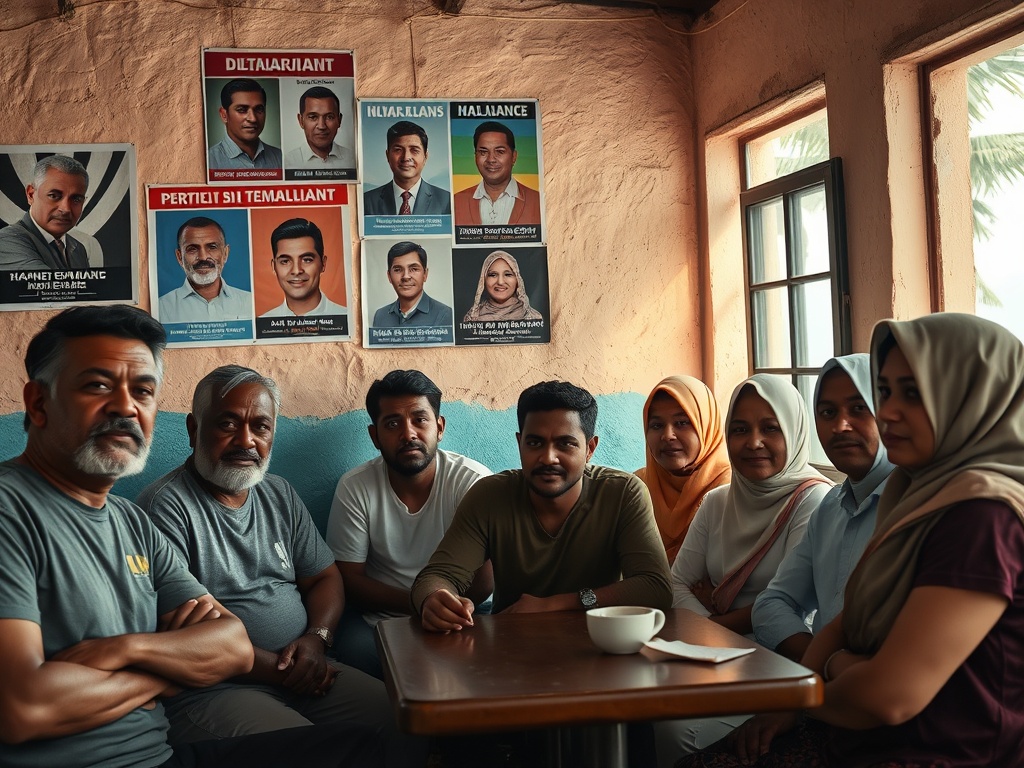
Young Maldivians in Coffee Shops, Tired of Party Politics
Across the Maldives, a political restlessness simmers beneath the surface of party loyalties and campaign promises. The sentiment echoes through conversations in Malé's coffee shops and social media platforms: a deep-seated frustration with political business as usual and a yearning for genuine change untainted by existing power structures.
This discontent manifests in multiple forms. Some voters declare they will not support anyone who has abandoned their former party affiliations, seeing such moves as opportunistic rather than principled. Others voice skepticism about electoral fairness itself, suggesting that incumbent powers might manipulate the process to maintain control. These concerns reflect a broader anxiety about democratic integrity in a political landscape where establishment forces wield significant influence.
At the heart of this discontent lies a compelling call for youth leadership—but with an important qualification. The demand isn't merely for younger faces in power, but for a movement that operates independently rather than as a subsidiary to the current political establishment. The vision is of a new generation of leaders who bring both dedication and competence to governance, particularly in critical roles like municipal leadership where tangible improvements in daily life are most felt.
Strategic concerns about electoral manipulation also surface in these discussions. Observers note patterns of infrastructure inaugurations and project announcements timed to coincide with election cycles, viewing them as attempts to sway public opinion through visible, if sometimes superficial, achievements. Critics argue this approach has failed before and will likely fail again, suggesting voters have grown wary of such tactics.
Underlying these political calculations is a deeper philosophical question about the relationship between citizens and their leaders. The conversation has shifted toward the importance of electing informed individuals with self-respect rather than creating dependency relationships. This perspective challenges the traditional political dynamic where supporters become unquestioning followers of particular figures.
The debate also touches on international agreements and their political weaponization, with some arguing that certain partnerships have been exploited for partisan advantage rather than national benefit. This reflects broader concerns about how external relationships impact domestic politics and sovereignty.
What emerges from these diverse voices is not a unified political platform but a shared hunger for authenticity in governance. The call is for leadership that prioritizes substance over spectacle, competence over connections, and public service over political survival. As election cycles approach, this underlying current of skepticism toward establishment politics—whether from incumbents or traditional opposition—suggests the Maldivian political landscape may be ripe for genuine transformation, if the right movement can capture this emerging sentiment without being co-opted by the very systems it seeks to change.
— Source fragments: We need a youth led movement. But we don’t need a youth led movement that acts as a subsidiary to the current establishment; Government is planning to bamboozle the public into voting them by inauguration of many projects during 2028 campaign; need to elect people who are better informed and have self respect