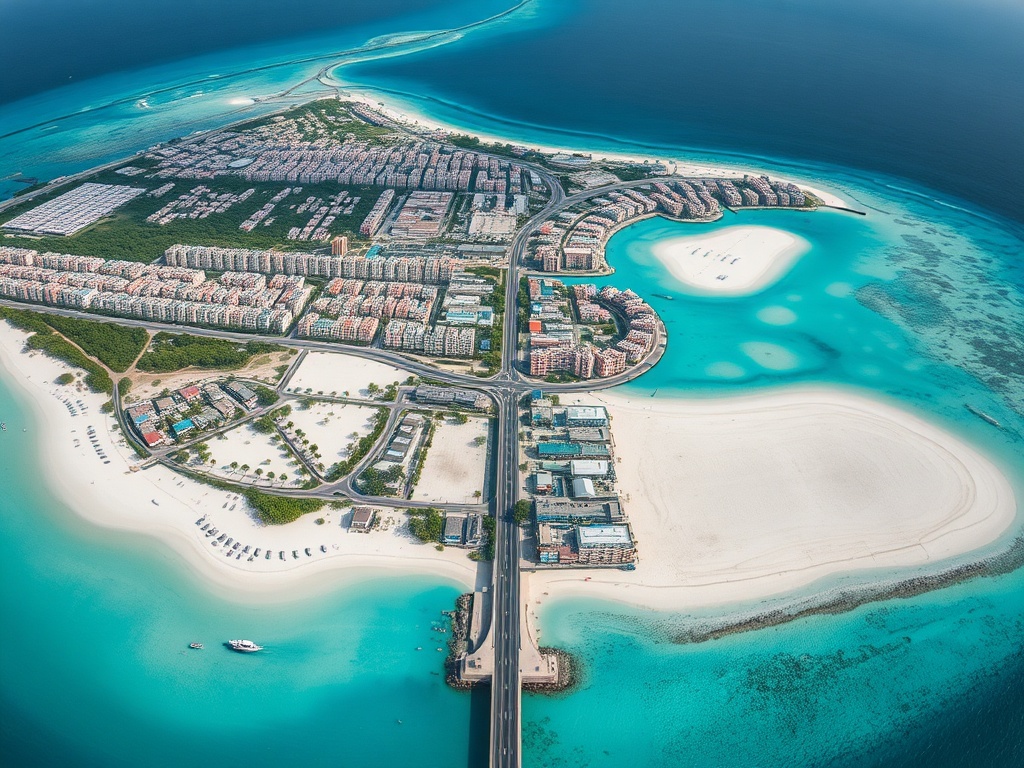
Your ID Card Island Determines Your Future
In the scattered archipelago of the Maldives, land isn't just territory—it's destiny. The circumstances of one's birth, the island stamped on their identification card, determines their relationship to the most fundamental form of wealth. This system, as one observer sharply notes, feels feudal in nature, binding citizens to ancestral plots while creating artificial scarcity in a nation where population growth has stagnated.
The core tension lies in the contradiction between inherited privilege and modern mobility. Consider the hypothetical: a northern islander receives a promising job offer in Addu. Under current frameworks, purchasing property, establishing roots, and then selling to return home becomes fraught with bureaucratic and cultural complications. This rigidity contradicts the natural flow of human capital that a developing economy requires.
Meanwhile, the distribution mechanism itself faces scrutiny. The Binveriya scheme, described by critics as "the biggest issue of our generation," grants land in Malé based on ancestral claims rather than current need or contribution. This creates what many perceive as a two-tier system: those with Malé addresses receiving land automatically at eighteen, while others must wait until marriage or established residency elsewhere.
This isn't merely theoretical. Real consequences manifest in crowded rental markets and generational inequality. Multiple voices describe inheriting theoretical land—"could you please help me find that land?"—while paying rent in Malé for decades. The accumulation continues: one person from Baa Atoll describes inheriting 3,000 square feet from their father, expecting another 2,000 from their mother, while simultaneously building a guesthouse on council land and maintaining a claim for government allocation.
The solution, many argue, lies not in abandoning land distribution but reforming its mechanics. Policy could address land hoarding—the practice of holding unused property because it costs nothing to maintain. As one commenter notes, when holding land becomes financially burdensome, even major landowners would release unused properties back into circulation. The vacant reclaimed lands across Dhidhoo, KF, Hinnavaru, Naifaru, and Addu stand as silent testament to failed allocation policies.
The debate reveals deeper philosophical divides about wealth and entitlement. As one voice starkly observes: "No wealthy person talks against wealth. It's us poor people who are talking against our interests." This captures the tragic irony of systems that perpetuate inequality while convincing the disadvantaged to defend them.
Moving forward requires confronting uncomfortable truths about inheritance, mobility, and the purpose of land in a modern nation. Should property remain tied to bloodlines, or should it serve as a tool for economic development and social mobility? The answer likely lies in balanced reform—policies that respect cultural attachments to ancestral islands while creating mechanisms for equitable distribution based on need, contribution, and the realities of a mobile population.
The land question ultimately reflects broader tensions between tradition and progress, between inherited privilege and earned opportunity. As the Maldives navigates its development path, resolving this fundamental inequity may determine whether the nation remains bound by the geography of birth or creates systems that allow citizens to write their own destinies.
— Source fragments: currently we are stuck with land we are born in. this is feudal system; population is not growing. its dying actually. so there shall be enough land always; why not? the problem to solve is land hogging. people not using land; I am from baa atoll. I have a bin in my island. I also have inherited another 3000 sq ft; Binveriya scheme is THE biggest issue of our generation; Why did you assume I am OK with giving free lands in other islands?; What is given is given, cannot be taken back. now we need to think what else can be done to make the land issue more equitable