Your Name on a Deed You Cannot Build On
In the scattered archipelago of the Maldives, land is more than territory—it is identity, inheritance, and increasingly, the source of political contention. Across social media platforms and coffee shop conversations, a recurring theme emerges: the frustration with a system that seems to perpetuate inequality through land distribution policies.
The Binveriya scheme, described by some as "the biggest issue of our generation," has become a flashpoint in this ongoing debate. At its core lies a fundamental question: who deserves land, and under what conditions? Critics argue that the current approach creates artificial divisions, where "a Male' address" becomes a golden ticket regardless of actual need or connection to the capital.
This system creates what one observer calls a "feudal" dynamic, where geographic origin determines opportunity. The sentiment echoes through voices from Baa Atoll to Addu—citizens who have built lives across islands yet find themselves locked out of land ownership in the places they call home. The irony is stark: while some inherit multiple plots through family lines, others remain landless despite decades of contribution to their communities.
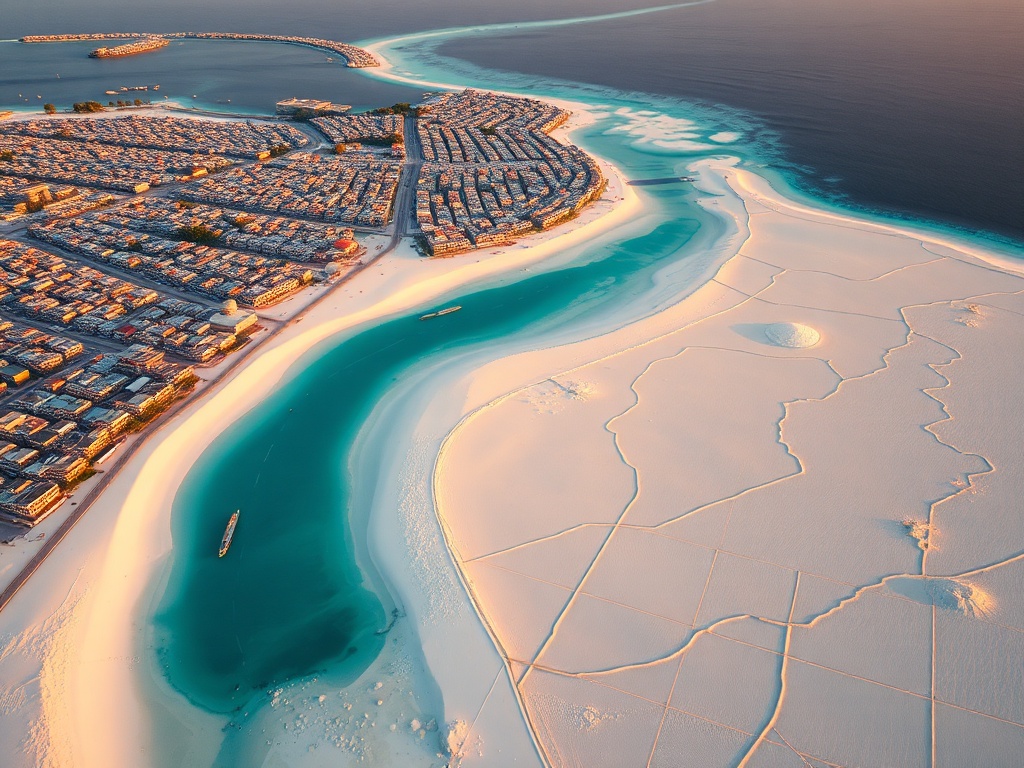
Policy solutions exist but require political will. The vacant reclaimed lands across Dhidhoo, KF, Hinnavaru, and other islands stand as monuments to poorly planned distribution. Meanwhile, the concept of making land ownership contingent on releasing other holdings—a principle theoretically embedded in some schemes—remains inconsistently applied.
Economic instruments could address land hoarding, where unused properties incur costs that encourage circulation back into the market. As one comment noted, when holding land becomes financially burdensome, even large landowners would have incentive to release unused properties.
The human dimension remains most compelling. The young professional from the north who cannot accept a job offer in Addu because housing remains inaccessible. The family in Male' paying rent while holding inheritance rights to land they cannot practically use. The intergenerational transfer of property creating both security for some and exclusion for others.
What emerges is not merely a policy debate but a conversation about national identity in transition. As population patterns shift and economic opportunities evolve, the rigid connection between bloodline and land rights appears increasingly anachronistic. The solution likely lies not in simply distributing more land, but in creating fluid systems that recognize modern mobility while honoring historical connections.
The challenge for policymakers is to move beyond electoral cycles and address structural inequities. This requires acknowledging that land distribution cannot be solved through one-time grants but demands sustainable systems that adapt to changing demographics and economic realities. The conversation has begun—the implementation remains the greater test.
— Source fragments: currently we are stuck with land we are born in. this is feudal system; population is not growing. its dying actually. so there shall be enough land always; why not? the problem to solve is land hogging; I am from baa atoll. I have a bin in my island. I also have inherited another 3000 sq ft; Binveriya scheme is THE biggest issue of our generation; Why did you assume I am OK with giving free lands in other islands?; What is given is given, cannot be taken back. now we need to think what else can be done to make the land issue more equitable