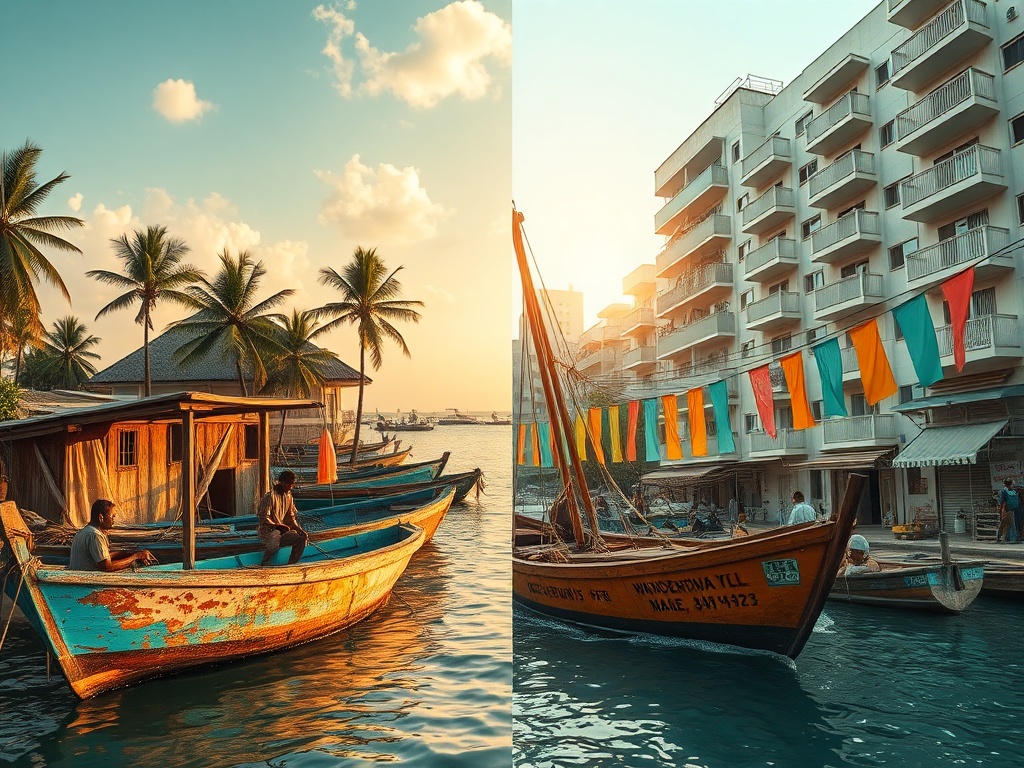
Your Vote, Your Ancestor's Island
In the aftermath of recent elections, a fundamental question echoes across Maldivian social media and coffee shops: Why should voting rights remain tethered to ancestral islands many citizens have never called home? The debate over permanent address requirements has moved from technical electoral discussion to central political fault line, exposing deep tensions between tradition and modernity in the archipelago's governance.
The current system, where citizens vote based on their permanent address rather than actual residence, creates what critics call a "democratic distortion." As one thread of discussion notes, this arrangement means many urban dwellers in Greater Malé continue voting for councils and representatives in islands they've never lived on, while their actual communities remain underrepresented. The mathematical consequence becomes starkly apparent—Greater Malé could command up to 40 parliamentary seats under a residence-based system, fundamentally reshaping political power dynamics.
Opposition to the status quo crosses partisan lines, with voters expressing frustration that major parties remain wedded to an outdated framework. The Maldivian Democratic Party (MDP) and People's National Congress (PNC) face mounting pressure to address what many describe as a "deal-breaker" issue that influenced the 2023 election outcome. Yet as electoral post-mortems continue, there's little indication either establishment party is prepared to champion systemic reform.
Defenders of the current arrangement point to the unique nature of Maldivian society, where tight-knit island communities maintain strong connections regardless of physical location. They argue the system preserves cultural ties and ensures remote islands maintain political voice. Practical concerns also surface—how would electoral authorities track a mobile population in a nation where internal migration between islands remains fluid?
The debate transcends technicalities to touch on fundamental questions of belonging and citizenship. For a generation increasingly mobile between islands for education, employment, and opportunity, the permanent address system feels increasingly anachronistic. As one commentator framed it, citizens should be able to "freely move in our own country and still vote based on where we live"—a sentiment capturing the aspirations of many young Maldivians.
What emerges is not just an electoral reform discussion but a broader conversation about how the Maldives navigates its future. The tension between preserving community bonds and acknowledging demographic realities reflects the nation's larger struggle to balance tradition with modernization. With trust in political institutions wavering, the address debate becomes a proxy for deeper questions about representation, equity, and what constitutes meaningful political participation in a rapidly evolving island nation.
As the country looks toward future elections, the permanence of the permanent address system appears increasingly uncertain. The groundswell of public sentiment suggests this isn't merely a procedural complaint but a fundamental reconsideration of how democracy should function across the scattered islands of the Maldives.
— Source fragments: MDP election analysis, permanent address criticism, voting residence arguments, political party disillusionment, representation concerns