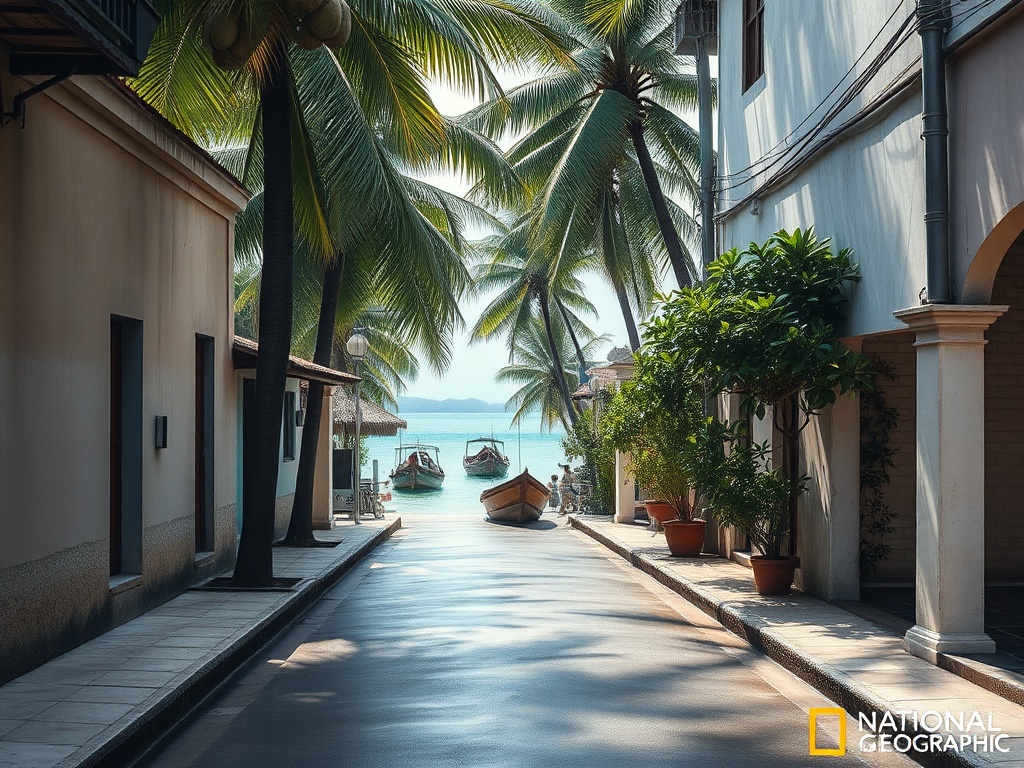
Zahir's Boundary Dispute in Villingili's Narrow Lanes
The narrow lanes of Malé hold stories within their concrete walls, and a recent property dispute in the capital's Villingili ward has unearthed familiar tensions. Zahir of V. Hedheykuri finds himself clarifying boundaries, asserting his home stands clear of contested trees, while nearby properties—V. Baaharu and V. Athiri Hiyaa—remain occupied by tenants, their owners absent since the beginning. The owners of these plots were notably missing from community discussions, raising questions about participation and representation in local decision-making.
Rumors circulate through the island's informal networks, suggesting a wealthy foreign developer seeks two additional traditional Maldivian boats, known as 'nikagas,' for a newly dredged resort. Having already acquired one, the developer reportedly needs two more to complete his vision, creating a ready market for these vessels that once defined Maldivian maritime life. This intersection of tourism development and cultural artifacts represents the ongoing transformation of the Maldives' economic and physical landscape.
Against this backdrop, residents voice broader concerns about ownership and belonging in the capital city. 'Malé isn't anyone's private property,' one perspective emphasizes. 'It's the capital of the whole nation. We all have a claim here—our taxes pay for it just as much.' This sentiment reflects the complex relationship Maldivians maintain with their densely populated capital, where individual property rights coexist with collective national identity.
The discussion extends to fiscal policy, with some hoping the next property tax adjustment will align with the central bank's inflation targets, similar to models used in cities like Calgary. This technical consideration underscores how global economic concepts are being localized to address Maldivian urban challenges.
These individual property cases mirror larger patterns affecting the capital: absentee ownership where properties are rented from day one, development pressures that transform both land and seascape, and the constant negotiation between private interests and public good in a city where space remains the ultimate luxury. As Malé continues to evolve, these disputes serve as microcosms of the broader balancing act between preservation and progress that defines contemporary Maldivian society.
— Source fragments: Zahir V.HEDHEYKURI house location clarification, V.BAHAARU and V.ATHIRI HIYAA rental properties, foreign resort developer seeking nikagas, Malé as collective capital, property tax inflation alignment