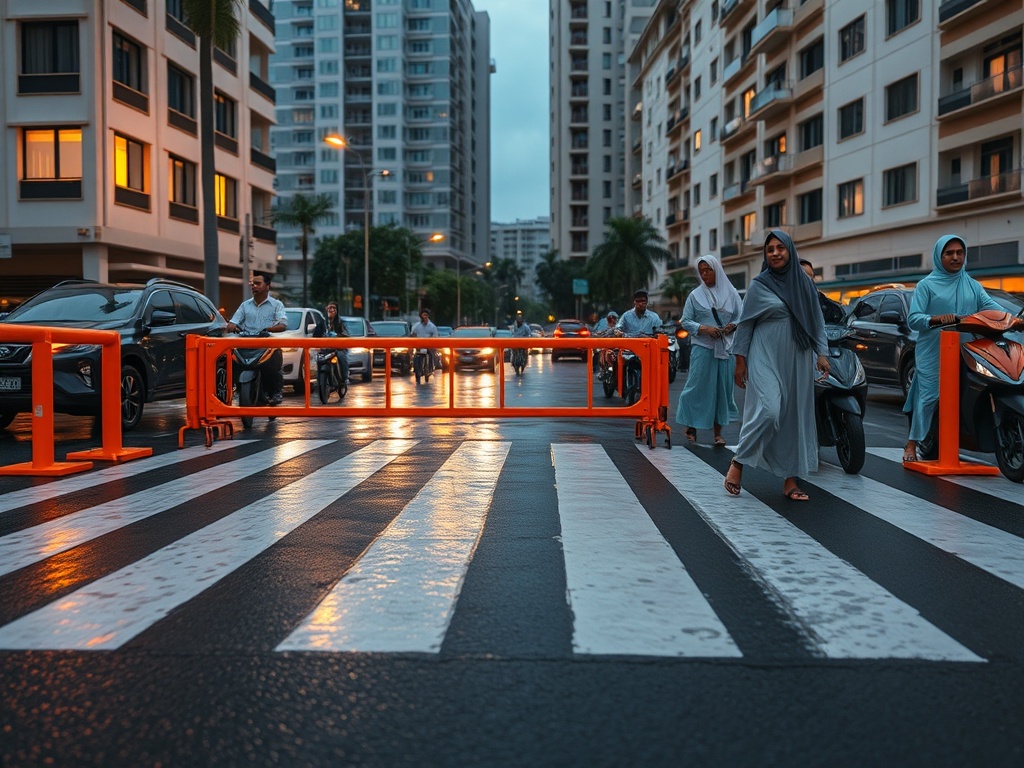
Zebra Crossing Barriers and Power Outages: The Maldives' Development Divide
A freshly painted zebra crossing on a Malé street stands cordoned off with barriers, its stripes allegedly laid incorrectly. This small urban detail reveals a national tension: the chasm between planned development and lived reality. Commuters navigating newly configured lanes question why only two exist where more might flow, their skepticism born of repeated disappointment.
That street-level doubt echoes across the archipelago. Proposals to transform thoroughfares into two-way systems meet public warnings about creating another 'i heaven'—a reference to troubled infrastructure projects past. The phrase 'This is Moldees' carries the weary weight of historical precedent, where grand visions crumble against implementation realities.
Ambitious proposals for offshore platforms and futuristic structures prompt practical questions from those who know the ocean's true nature. Fishermen and seafarers understand what development planners sometimes overlook: the mighty waves and winds that would test any marine construction, the hundreds of millions required for projects of questionable viability. Romanticism collides with arithmetic.
In the northern atolls, basic services falter. Uthuru Dhaaira has been without power for days—a stark contrast to discussions about new airports in Hulhumalé promising decentralization and fairness. These parallel conversations highlight the duality of Maldivian development discourse: leapfrogging toward grand infrastructure while fundamental utilities remain unreliable.
At the heart lies a cultural phenomenon: treating essential needs as 'fairy tale-esque' while trivial rivalries consume attention. The competition for bigger bridges than neighboring islands exemplifies a philosophy prioritizing spectacle over substance. Political capital flows toward visible, vote-winning projects rather than systemic solutions to corruption, housing crises, or healthcare shortages.
The Maldivian citizen navigates poorly marked streets while hearing promises of offshore marvels, experiences power outages while discussing new airports, faces housing shortages while witnessing politicized resource distribution. The journey from port to airport, both literal and metaphorical, reveals a nation struggling to align aspirations with administrative capabilities, dreams with debts, political rhetoric with daily realities.
— Source fragments: zebra cross incorrectly painted with barriers; skepticism about two-way street conversion; reference to failed 'i heaven' project; questions about futuristic offshore platform viability; Uthuru Dhaaira power outage; Hulhumalé airport decentralization discussion; critique of prioritizing trivial projects over essential needs